Swaddle vs. sleep sack: when to stop swaddling and how to transition
When to stop swaddling (8–16 weeks or first sign of rolling), swaddle vs. sleep sack comparison, newborn side-rolling rules, and a 7-night transition plan.
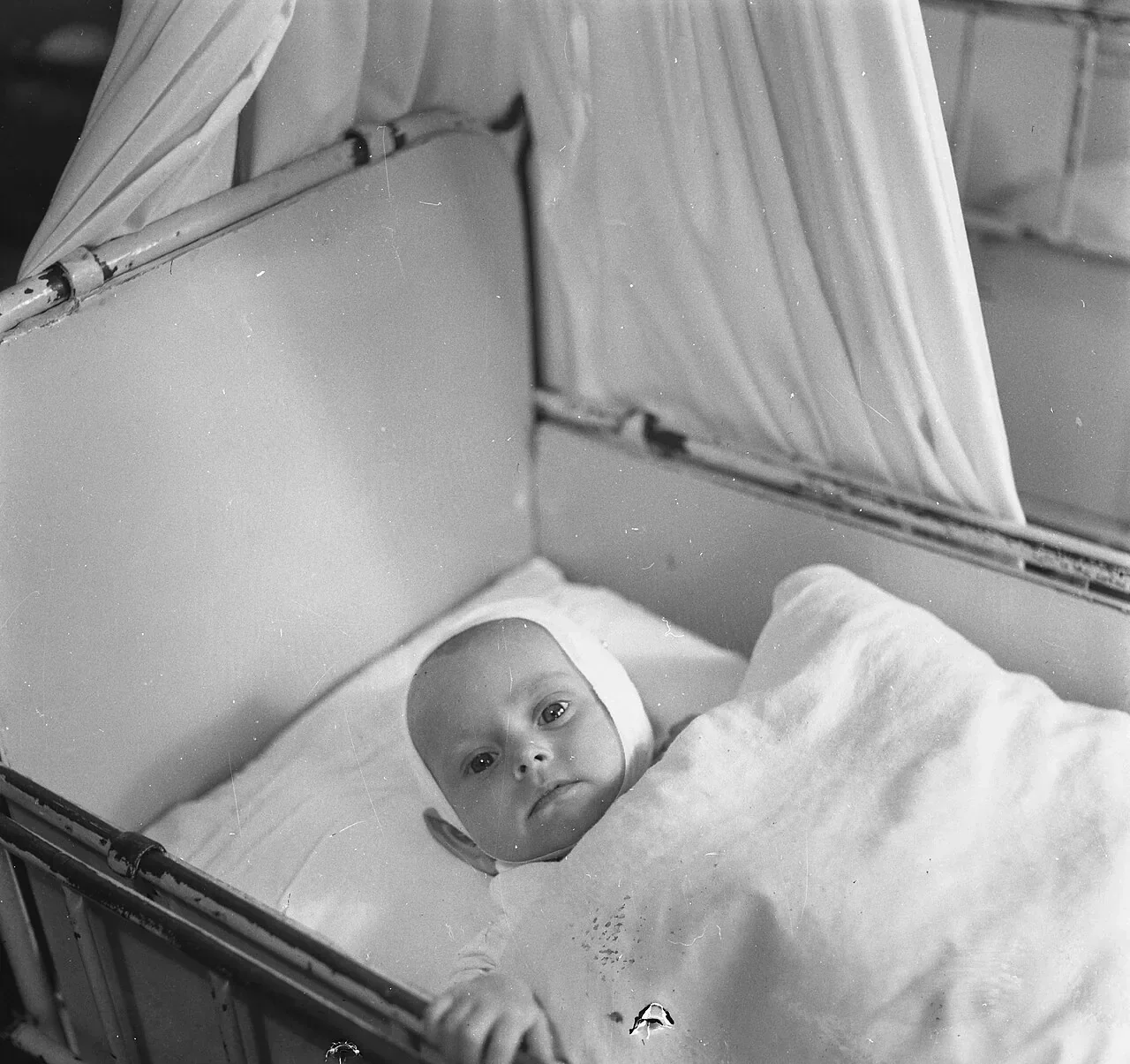
Quick answer: Stop swaddling your baby as soon as they show the very first sign of attempting to roll onto their side or stomach—which commonly happens between 8 and 16 weeks (2 to 4 months) of age. Once arms-in swaddling stops, switch to an unweighted, well-fitted arms-free sleep sack (wearable blanket) so your baby has full use of their hands and shoulders to push up and keep their airway clear.
8–16
Weeks when rolling signs begin
AAP guidelines advise stopping swaddling at the first attempt to roll, often around 2–3 months.
3–7
Nights for the Moro startle to fade
Whether you go cold turkey or one-arm-out, arms-free settling stabilises within a week.
16–20
°C (60–68 °F) ideal room temperature
Pair a 0.5 to 2.5 TOG unweighted sleep sack with room temperature to prevent overheating.
0
Weighted swaddles or sacks advised
The AAP explicitly warns against weighted swaddles and weighted sleep sacks.
A swaddle is a snug wrap or pod that holds a newborn’s arms against their torso to dampen the involuntary Moro startle reflex, whereas a sleep sack is a wearable blanket that leaves both arms completely free so an infant can push up and roll safely. Knowing when to switch from one to the other is one of the most important safety milestones of the first four months.
Because a swaddled baby who flips onto their stomach has no hands available to turn their head and clear their airway, pediatric guidelines tie the end of swaddling to motor signs rather than a calendar birthday. Below is how to spot the earliest rolling cues, how swaddles compare against sleep sacks, and how to complete the transition in 3 to 7 nights without losing your hard-won night stretches.
How does a swaddle compare vs. a transition swaddle vs. an arms-free sleep sack?
Comparing an arms-in swaddle versus a winged transition suit versus a standard arms-free sleep sack comes down to two questions: is your baby showing any sign of rolling, and is their hip joint able to flex and abduct freely?
| Garment type | Arms position | Safe age / motor stage | Hip safety check | When to stop using it |
|---|---|---|---|---|
| Traditional / Velcro swaddle | Both arms snug inside against chest | Birth to 8–12 weeks (pre-rolling only) | Bottom pouch must be wide enough for legs to bend up and out like a frog | Immediately at the first sign of rolling onto side or tummy, or breaking free regularly |
| One-arm-out / zip-off wing swaddle | One arm free, one arm enclosed | 8–14 weeks (proactive transition before rolling starts) | Wide hip-healthy sack base | As soon as the baby attempts to roll; switch to both arms free that same night |
| Arms-free sleep sack (wearable blanket) | Both arms completely free through sleeveless armholes | Birth (if sized snugly at neck/armholes) through 24–36 months | Full leg room with zero loose blanket fabric near face | When the toddler climbs out of the cot or transitions to a toddler bed |
For hip health, the International Hip Dysplasia Institute and the AAP emphasize that any swaddle or sack must leave the hips and knees free to flex upward and outward. Tightly wrapping a newborn’s legs straight down like a cigar increases the risk of hip dysplasia.
What are the exact signs that it is time to stop swaddling?
You should stop swaddling as soon as you see any one of five developmental markers—most commonly between 8 and 16 weeks of age, right as your baby moves from our newborn sleep schedule by week into the 3 to 5 month old sleep schedule:
- Rocking onto a shoulder or hip during floor play. If your baby lifts both legs into the air and slams them sideways to pivot onto their side during tummy or back play, they can do the same movement in the cot at 3:00 am.
- Pushing up onto forearms during tummy time. Strong neck and shoulder extension means rolling back-to-front or front-to-back is days away.
- Breaking an arm out of the swaddle every night. A baby who fights loose fabric near their face creates a loose-bedding hazard; they are also telling you they want their hands to self-soothe.
- Fading Moro startle reflex. Between 12 and 16 weeks, the reflexive arm-flinging startle fades naturally.
- Approaching the 4-month sleep progression. Transitioning out of the swaddle before or during the 4-month sleep regression lets your baby suck on their fingers or rub their head to link 45-minute sleep cycles on their own.
What if my 1-week-old newborn rolls onto their side in the bassinet?
Parents are often alarmed when a 5-day-old newborn tips onto their side in the bassinet. In the first 2 to 3 weeks of life, this is almost always the involuntary newborn curl—leftover flexed muscle tone from nine months curled in the uterus—rather than intentional rolling.
When a newborn curls onto their side in Weeks 1 to 3, gently roll them back onto their flat back, check with a level that your bassinet mattress is not tilted, and ensure the swaddle is not bunched unevenly behind one shoulder. By Week 4, the newborn curl relaxes; any side-rolling that starts after 6 to 8 weeks is deliberate muscle work and means swaddling must end.
How do you transition out of the swaddle in 7 nights (step-by-step)?
If your baby is already rolling, skip straight to Step 4 tonight (both arms out in a sleep sack). If your baby is 8 to 12 weeks old and has not yet attempted to roll, use this 6-step gradual protocol to retire the swaddle inside one week:
- Check wake windows before Night 1. An undertired baby waves their newly freed arms around the cot for 40 minutes like windmills. Verify your baby’s age band in the wake window calculator so they go down with solid sleep pressure.
- Nights 1–3: Release the dominant arm at bedtime and Nap 1. Swaddle with one arm out (usually the arm your baby sucks on most) and the other arm tucked in. Keep afternoon naps in the same setup.
- Nights 4–6: Release the second arm while keeping gentle torso snugness. Leave both arms free while wrapping the Velcro band snugly (two fingers of space) across the chest below the armpits, or switch directly into a well-fitted sleeveless sleep sack.
- Night 7 onward: Move full-time into an unweighted sleep sack. Retire all swaddle wraps from the nursery so nobody reaches for one out of habit at 2:00 am.
- Stabilise startled hands for 30 seconds at put-down. When you lay your baby down awake in their sleep sack, gently hold their forearms against their chest for 20 to 30 seconds until their breathing slows, then lift your hands away.
- Give 15 minutes of extra floor play per wake window. Let your baby touch their face, knees, and cot bars during the day so having free hands feels mundane by bedtime.
How do you dress a baby under a sleep sack by room temperature (TOG chart)?
Overheating is an independent risk factor for sleep-related infant death. Instead of guessing with extra blankets, check your nursery temperature and pair a single bodysuit/sleeper layer with the matching sleep sack TOG (Thermal Overall Grade):
- Warm room (22–24 °C / 72–75 °F): Short-sleeve cotton bodysuit + 0.5 TOG muslin or cotton sleep sack.
- Standard room (19–21 °C / 66–70 °F): Long-sleeve footed cotton sleeper + 1.0 TOG sleep sack.
- Cool room (16–18 °C / 60–65 °F): Short-sleeve cotton bodysuit + long-sleeve footed sleeper + 2.5 TOG quilted cotton sleep sack.
Always check your baby’s temperature by feeling the back of their neck or chest—never their hands or feet, which are naturally cool due to immature circulation. If the neck feels sweaty or clammy, remove one layer immediately. ## Why are weighted swaddles and weighted sleep sacks unsafe?
In its 2022 safe-sleep policy statement, the American Academy of Pediatrics explicitly warns against weighted swaddles, weighted sleep sacks, and weighted blankets for infants. Because an infant’s ribcage is soft and cartilaginous, added chest weight can depress chest wall expansion, reduce oxygen saturation, and blunt the protective arousal reflex that wakes a baby if their airway is compromised.
What if my baby wakes up every 20 minutes on the first night arms-free?
During the first 2 to 4 nights out of a swaddle, it is normal for an infant’s newly freed hands to brush their cheeks or knock their pacifier out, causing a brief startle at the end of a 45-minute cycle. Resist the urge to put the swaddle back on at 1:00 am—re-swaddling resets your baby’s motor adaptation back to zero.
Instead, fold the built-in mittens over their hands for the first three nights if fingernails are scratching their face, hold their forearms gently against their chest for 20 seconds when placing them into the cot, and wait 60 seconds before intervening at brief night stirrings. Stick strictly to unweighted 100% cotton, merino wool, or muslin sleep sacks with a clear TOG rating. Browse our sample sleep schedules and wake windows by age chart to pair your new sleep-sack routine with age-appropriate nap timings. All guidance in this article is educational and is not medical advice; consult your paediatrician if you have questions about your baby’s motor milestones, hip health, or safe sleep setup.
Questions
At what exact age do you have to stop swaddling a baby?
Stop swaddling the day your baby shows signs of trying to roll over, which the American Academy of Pediatrics notes can happen as early as 8 to 12 weeks (2 to 3 months) and almost always by 16 weeks (4 months). Age is secondary to motor development: if a 9-week-old rocks onto their shoulder during floor play, swaddling ends tonight.
What if my newborn rolls onto their side in the bassinet during the first 2 weeks?
In the first 1 to 3 weeks of life, many newborns curl onto their side from the involuntary 'newborn curl' reflex (tight flexor tone from the womb) rather than intentional rolling. Check that the bassinet is completely flat and level, gently return them to their back, and ask your paediatrician whether it is still reflexes or early intentional rolling.
Can a newborn wear a sleep sack from day one instead of a swaddle?
Yes. Swaddling is completely optional. As long as an unweighted, arms-free sleep sack fits snugly around the neck and armholes so the fabric cannot ride up over the baby's mouth or nose, a newborn can wear a correctly sized 0–3 month sleep sack from birth.
Is it better to transition out of the swaddle cold turkey or one arm at a time?
If your baby is already rolling or attempting to roll in the cot, stop swaddling both arms immediately (cold turkey) for safety. If your baby is 8 to 12 weeks old and has not yet tried to roll, transitioning one arm out for 3 nights and both arms out on Night 4 is a gentle proactive route.
Are weighted sleep sacks safe for the swaddle transition?
No. In its 2022 safe-sleep guidelines, the American Academy of Pediatrics explicitly recommends against weighted swaddles, weighted sleep sacks, and weighted blankets because added chest weight can restrict infant ribcage movement and impair arousal from sleep.
What TOG sleep sack should my baby wear at night?
Match the sleep sack TOG rating to your nursery thermometer: use a 0.5 TOG sack for warm rooms (21–24 °C / 70–75 °F), a 1.0 TOG sack for standard rooms (18–21 °C / 65–70 °F), and a 2.5 TOG sack over a cotton bodysuit and sleeper for cool rooms (16–18 °C / 60–64 °F).
Sources
- Sleep-related infant deaths: updated 2022 recommendations for reducing infant deaths in the sleep environmentAmerican Academy of Pediatrics (Moon et al., Pediatrics, 2022)
- Swaddling: is it safe for your baby?American Academy of Pediatrics, HealthyChildren.org
- The Lullaby Trust: baby sleeping bags and safe room temperatureThe Lullaby Trust
This guide is educational and does not replace advice from your paediatrician, health visitor or midwife.