How we work
Four levels of evidence, one vocabulary for uncertainty, and a review date that only moves when the page does.
Where the numbers come from
Sources are not equal, and pretending otherwise is how a blog post ends up citing a parenting forum. Every claim on this site is placed in one of four levels.
Systematic reviews and meta-analyses
Studies that pool the rest. The strongest evidence there is on infant sleep, and also the most hedged: a review of forty small studies usually concludes that the picture is unclear, which is the honest answer and a hard thing to build a schedule on.
Consensus statements and national guidance
The American Academy of Sleep Medicine's recommended hours, the AAP's safe-sleep guidance, NHS advice on night feeds. These carry weight because a body of clinicians signed them, and they are the source of every total-sleep figure on the site.
Cohort studies and sleep diaries
Large groups of families recording what actually happens. Good for describing the spread of normal behaviour, useless for proving that one approach causes another outcome.
Clinical practice
What paediatric sleep practitioners do, including the wake-window ranges. These are the weakest-sourced numbers on the site and they are labelled as such. They are useful because they describe a pattern thousands of clinicians have observed, not because anyone ran a trial.
The words we use
Vagueness is not humility. It is usually a way of avoiding a commitment. The site uses four terms, and they mean specific things.
- Range
- The spread found in the evidence or in practice, printed in full. A range is not a target with a preferred middle; the middle is only there because a calculator needs one number.
- Typical
- More than half of children in the studies, at that age, do this. It is a description of a crowd, not of your child.
- Often
- Common enough that it is worth knowing before it happens, and not common enough to expect. Evening cluster feeding at six weeks is often.
- We don't know
- Used when the honest answer is that nobody has measured it well. It appears more than once on this site, and it is not a placeholder for an opinion.
Dates, review and corrections
Every guide carries a published date and a reviewed date. The reviewed date moves only when the content changes: a source is replaced, a number is corrected, a section is rewritten. Re-reading a page and deciding it is still right does not move the date, because a date that moves without a change tells you nothing.
When a correction is made, the old claim is removed rather than quietly edited into something plausible. If the correction changes the advice, the page says what changed and when at the bottom of the guide.
The site is reviewed against its sources twice a year. Anything that fails the check is rewritten or withdrawn, and a withdrawn guide leaves a note rather than a dead link.
What we don't publish
- Charts with no source line, however tidy they look.
- Percentages invented to make a point land harder.
- Averages presented as norms. "The average six-month-old sleeps eleven hours at night" is a statement about a mean, and half of all six-month-olds are below it.
- Advice on anything medical: reflux treatment, medication, feeding volumes, growth. Those belong to your paediatrician, and the site links out rather than improvising.
About the pictures
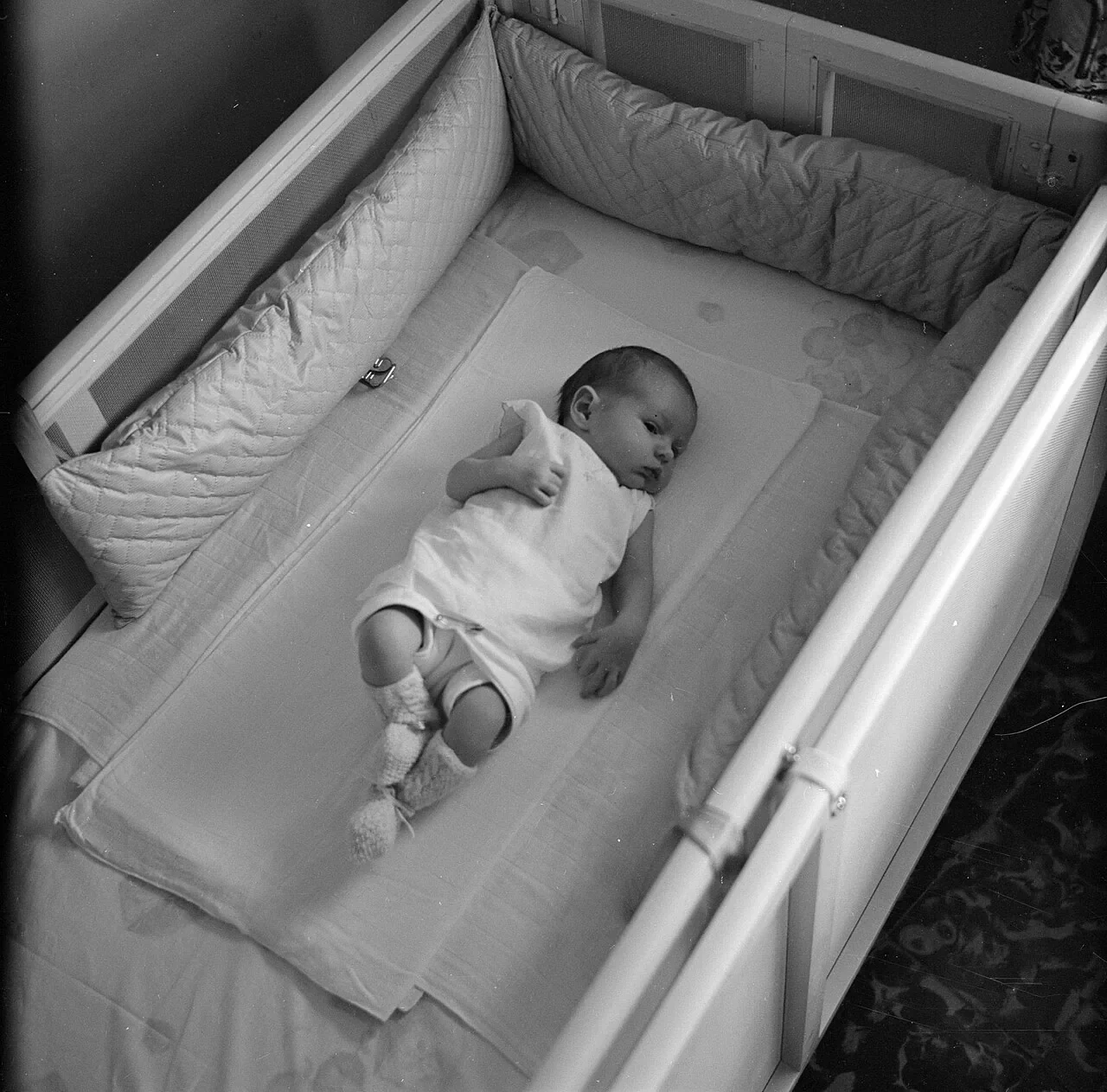
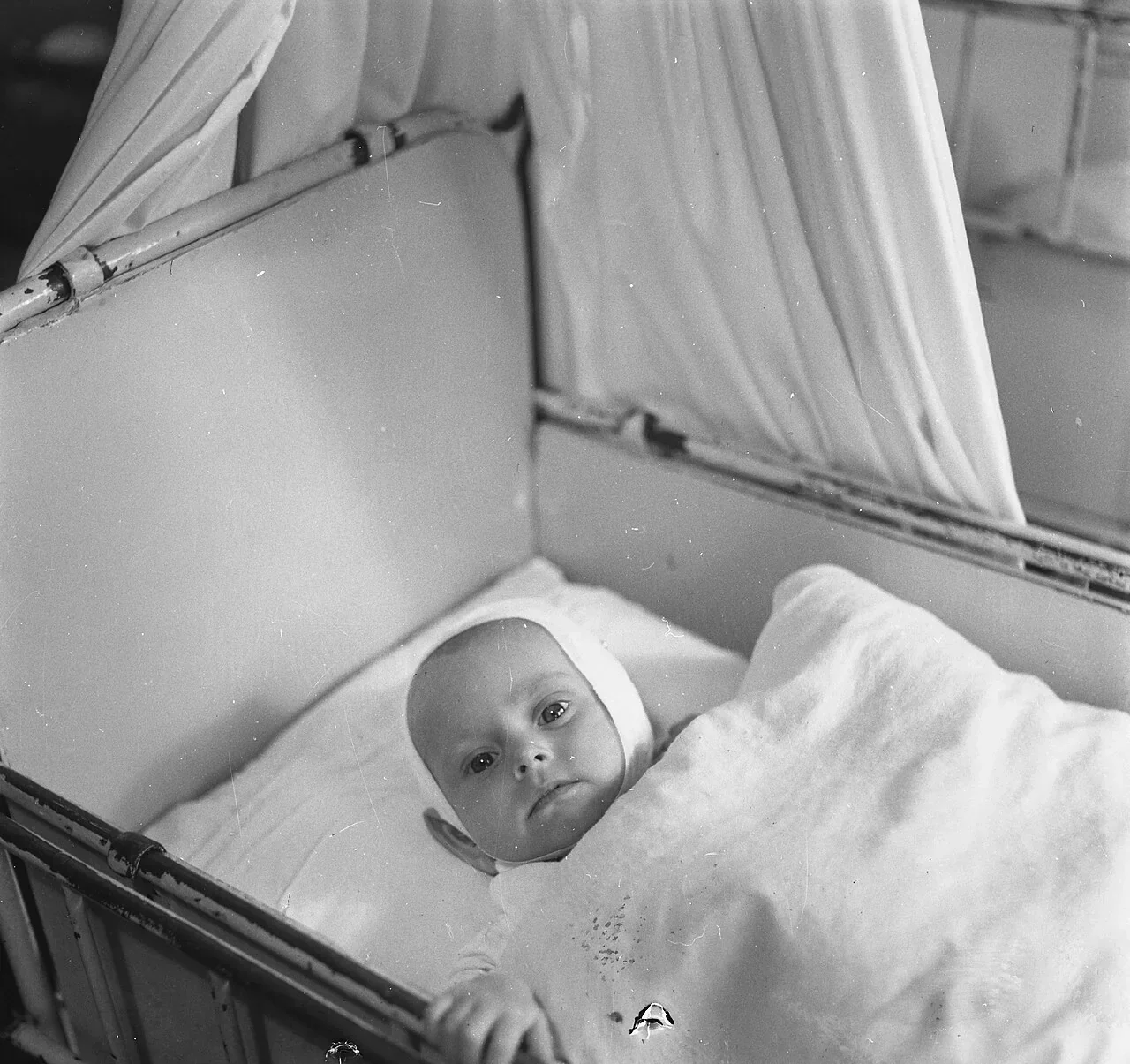
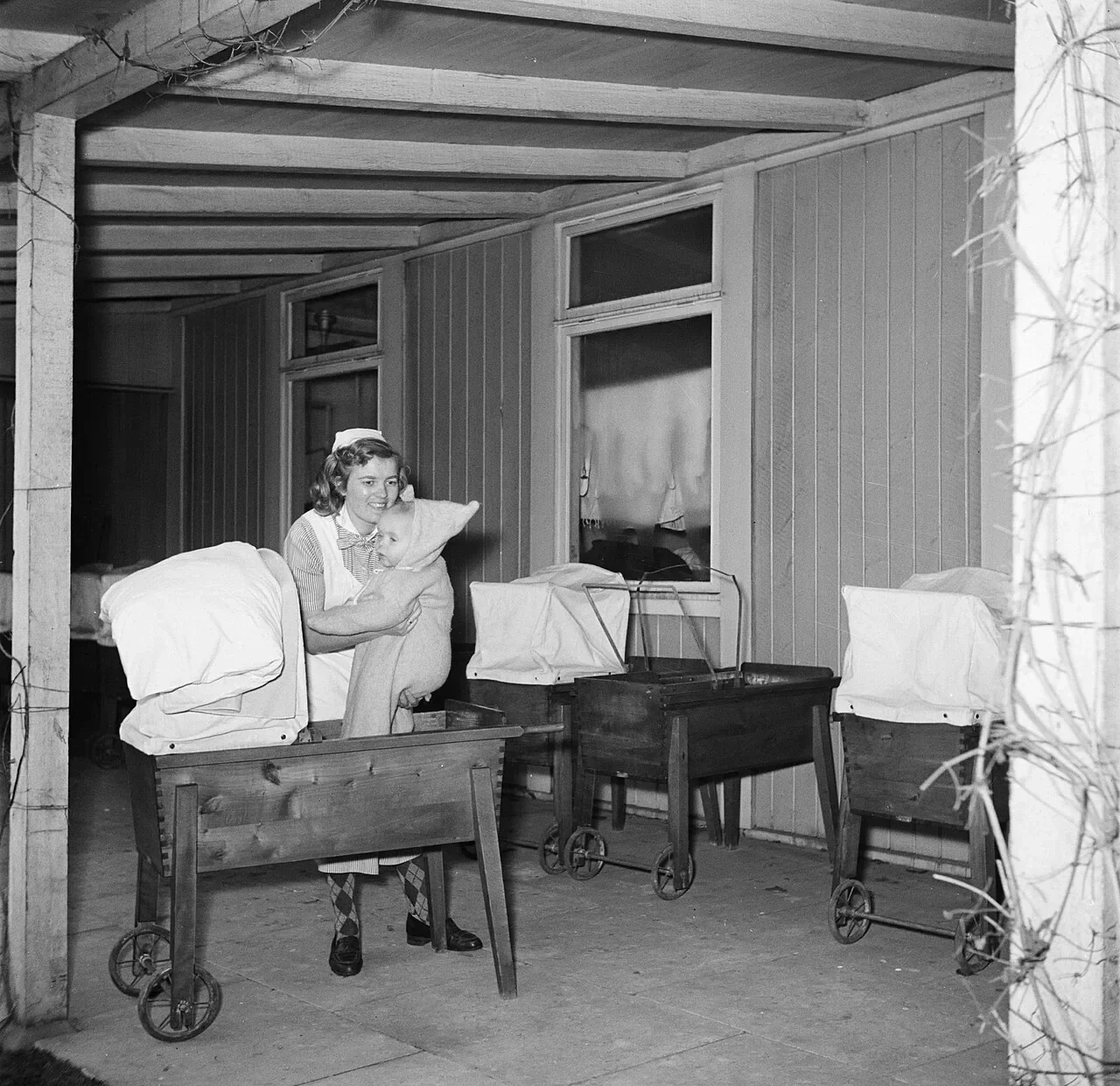
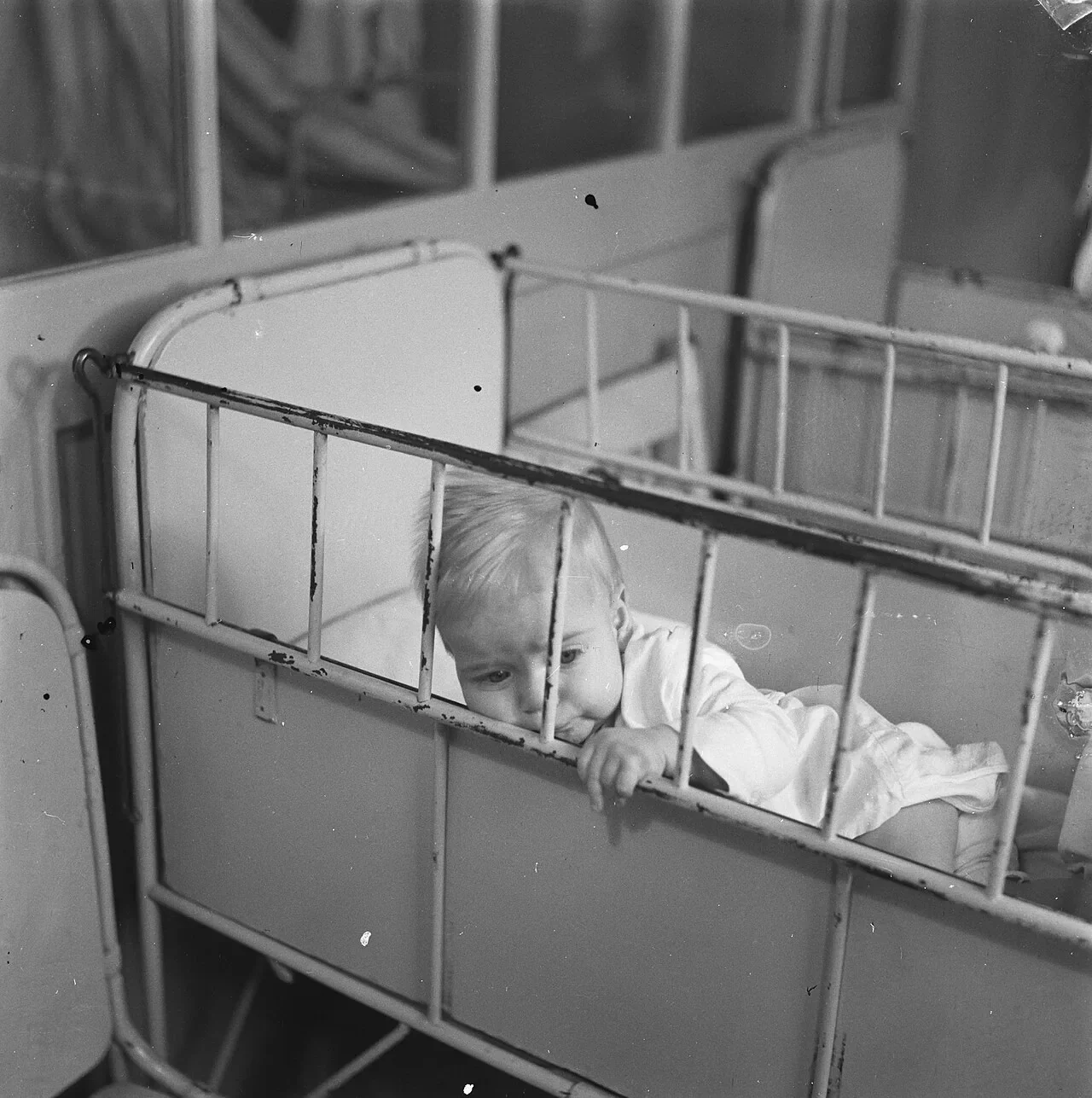
There are no stock photographs of smiling parents on this site, partly because they are dishonest about what four in the morning looks like, and partly because licensing a photo of a real family to illustrate an article about sleep training seemed like the wrong trade.
The images instead come from the Nationaal Archief's public-domain collection: Dutch nurseries, cots and cradles photographed between 1950 and 1955. They are free to use, credited on the credits page, and they have the useful quality of making the point that none of this is new.