The 4-month sleep regression: what actually changes and a 14-day plan
Why the 4-month sleep regression happens (2 sleep stages mature into 4), how long it lasts (10–21 days), why naps stop at 30 minutes, and a 14-day plan.
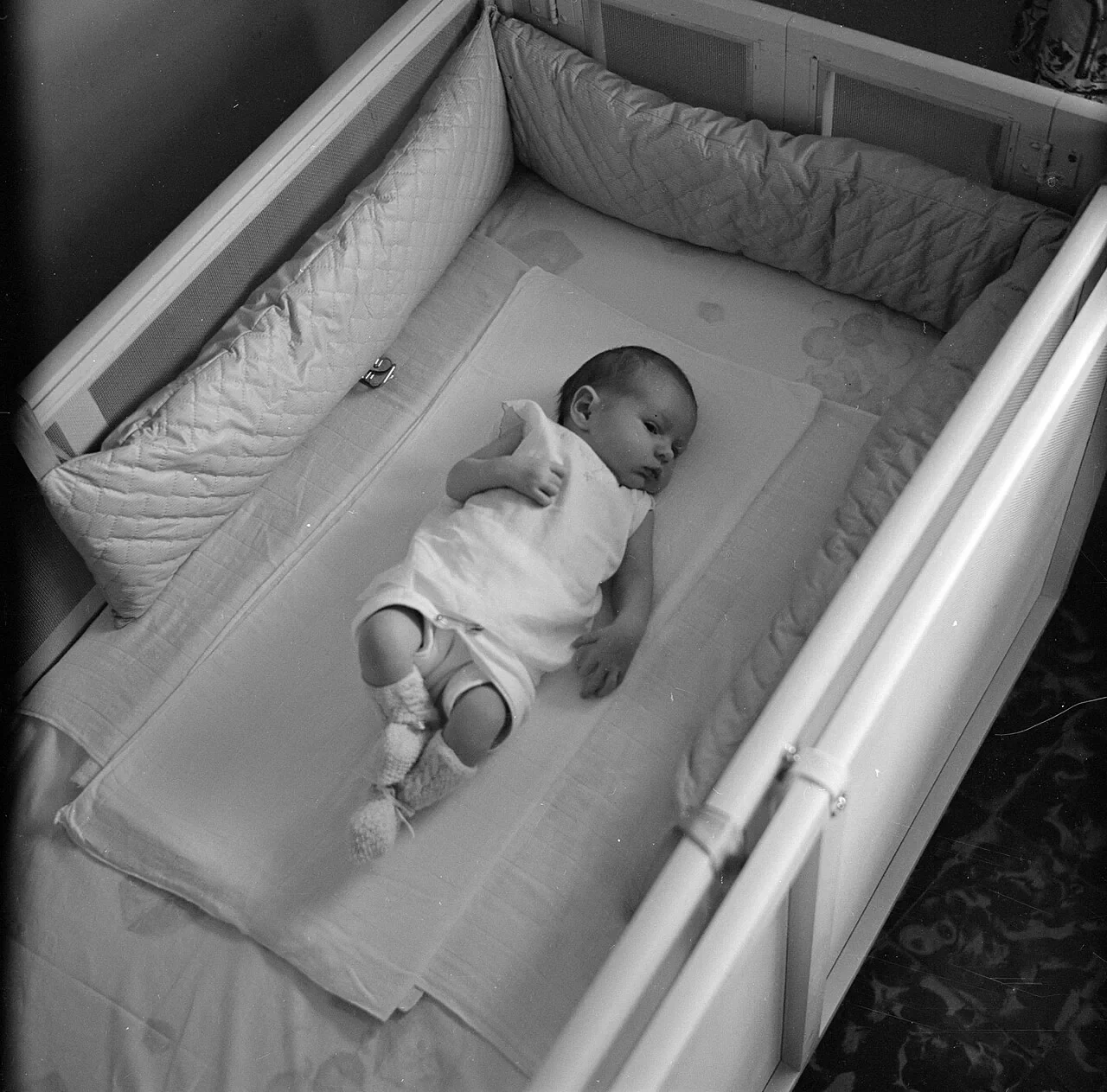
Quick answer: The 4-month sleep regression is a permanent maturation in infant sleep architecture that typically starts between 14 and 18 weeks of age. A baby's sleep cycle shifts from two newborn stages into four adult-like stages (N1, N2, N3 deep sleep, and REM), causing brief arousal every 35–45 minutes by day and 60–90 minutes at night for 10 to 21 days until self-settling habits catch up.
14–18
Weeks when the shift usually starts
Can appear as early as 12 weeks or as late as 20 weeks, adjusted for prematurity.
2 → 4
Sleep stages before and after
Newborn active/quiet sleep reorganises into the four-stage NREM/REM cycle.
10–21
Days for the acute disruption
The neurological reorganisation takes 2–3 weeks; only learned associations last longer.
35–45
Minutes in one daytime sleep cycle
Why formerly long newborn naps suddenly stop on the dot at 30–40 minutes.
The 4-month sleep regression is a permanent neurological reorganization in how an infant cycles through sleep, typically arriving between 14 and 18 weeks of age. It is not a temporary behavioural mood or a backward step: your baby’s brain is upgrading from two immature newborn sleep states into the four-stage sleep architecture that adults use every night.
Once you see the disruption as an architectural shift rather than a mystery illness, the practical decisions become straightforward. You cannot stop a 4-month-old from surfacing between sleep cycles, because every human surfaces between cycles; what you can change is whether your baby needs a full feed or rocking session to cross each bridge.
What actually changes in a baby’s brain at four months?
Between 12 and 18 weeks, a baby’s brain transitions from two sleep states (active sleep and quiet sleep) into four distinct stages: N1 (drowsy transition), N2 (light sleep with sleep spindles), N3 (slow-wave deep sleep), and REM sleep, arranged in 35–45 minute daytime cycles and 60–90 minute nighttime cycles.
Newborns enter sleep directly through active (REM-like) sleep, which is why you can transfer a 6-week-old from your shoulder into a bassinet without waking them. Around 4 months, infants begin entering sleep through 15 to 20 minutes of light N1/N2 non-REM sleep instead. Try to rock a 4-month-old to sleep in your arms and transfer them 5 minutes later, and their eyes pop wide open the second their back touches the cool mattress.
At the same time, the end of every cycle now brings a brief protective micro-arousal:
- More night surfacing. After an initial 3-to-4-hour stretch of deep N3 sleep at the start of the night, the baby cycles through light sleep and REM every 60 to 90 minutes from midnight until 6:00 am.
- 30-minute catnaps. Daytime naps arrest at the end of a single 35-to-45-minute cycle unless sleep pressure is high and the room conditions match what the baby saw when falling asleep.
- 5:00 am light-sleep wakes. By 4:30 am to 5:30 am, homeostatic sleep pressure is mostly spent and sleep is predominantly REM and N2, turning tiny noises or early sunlight into a full start to the day.
How does the 4-month regression compare vs. a growth spurt vs. teething?
Parents frequently wonder whether sudden wakings at 15 to 18 weeks come from the 4-month sleep regression versus a growth spurt versus early teething. Distinguishing the three prevents overfeeding at night when the real driver is a sleep-onset association.
| Feature | 4-month sleep regression | 3–4 month growth spurt | Teething / mild illness |
|---|---|---|---|
| Typical duration | 10–21 days for the transition | 3–5 days | 3–7 days around tooth eruption |
| Night waking pattern | Every 60–120 minutes after midnight, on the clock | 1–2 extra wakings with full, vigorous feeds | Irregular wakings with discomfort regardless of cycle |
| Daytime nap length | Drops sharply to 30–42 minutes per nap | Normal or slightly longer naps | Disrupted, clingy, comfort-seeking |
| Response to feeding | Comfort-sucks for 2–4 minutes, falls immediately asleep | Drains both sides or finishes a full 4–6 oz bottle | May pull off bottle/breast due to gum or ear pressure |
| Daytime mood | Happy in the first hour of wake window, fussy from short naps | Wants to cluster-feed every 1.5–2 hours all day | Drooling, swollen gum ridge, low-grade fever if viral |
Why do naps suddenly stop at 30 to 40 minutes?
A 30-to-40-minute nap is one complete infant daytime sleep cycle. Before 4 months, immature sleep transitions allowed babies to blur one cycle into the next; after 4 months, the brain runs a brief environment check between cycles and wakes fully if anything has changed since sleep onset.
Imagine falling asleep in your own bed on a pillow, and waking up 35 minutes later on the kitchen floor: you would jump awake and call out. When a 4-month-old falls asleep being bounced at the breast in a bright living room and wakes 35 minutes later alone on a flat cot mattress, that same alarm fires. Placing your baby into the cot awake—even for the first nap of the day—removes the surprise at the 35-minute transition. For exact clock timings across a 3- or 4-nap day, see our 3 to 5 month old sleep schedule and test your own morning start in the wake window calculator.
What is the 14-day plan to get through the 4-month regression?
The fastest way through the 4-month regression is a steady 14-day reset that separates feeding from falling asleep at bedtime, protects daytime sleep so the baby is not overtired, and keeps night responses predictable without jumping immediately into marathon crying.
Follow these 6 concrete steps for 14 consecutive days:
- Stretch wake windows to 90–120 minutes. Move from newborn 60-minute windows to 75–90 minutes before Nap 1, 90–105 minutes before Naps 2 and 3, and 105–120 minutes before bedtime. Compare these against the full wake windows by age chart.
- Darken the room and add continuous white noise. Make the sleep space pitch-dark for naps and nights, and run steady, non-looping white or pink noise at roughly 50 decibels (shower volume) at least 2 metres from the cot.
- Move the bedtime feed to the start of the routine. In Mindell et al.’s (2015) study of 10,085 children, a consistent 3-to-4-step bedtime routine produced measurable reductions in sleep-onset latency and night wakings within two weeks. Run the sequence as: feed in a dim room → burp and sleep sack (check if it is time to transition in our swaddle vs. sleep sack guide) → short book or song → into the cot awake.
- Practice the 90-second pause at night. Infants in active REM and cycle transitions grunt, whimper, and kick their legs for 30 to 90 seconds with their eyes closed. Wait 90 seconds before picking your baby up so you do not accidentally wake a resettling baby.
- Keep genuine night feeds, drop hourly snack feeds. Most 4-month-olds still need 1 to 2 nutritional night feeds (for example, around 1:00 am and 4:30 am). If your baby wakes 60 minutes after a full feed, resettle with shushing and patting in the cot rather than offering a 2-minute snack feed every hour.
- Bring bedtime 15–30 minutes earlier on short-nap days. If three naps total less than 2 hours of daytime sleep, place your baby down for bed at 6:30 pm–6:45 pm instead of stretching them until 8:00 pm.
What mistakes make the 4-month regression drag on for months?
Three well-intentioned reactions turn a 2-week developmental shift into a 4-month exhaustion spiral: switching settling tactics every 48 hours, keeping the baby awake for 3+ hours to force tiredness, and introducing new unsustainable sleep props at 2:00 am.
When parents try patting in the cot on Monday, bouncing on a yoga ball on Tuesday, and car-seat drives on Wednesday, the baby learns only that crying longer produces a novel response. Similarly, if your baby starts rolling onto their side or tummy during this week, stop swaddling immediately—arms must be free in a sleep sack for safe rolling—and give them 10 minutes of floor tummy time during every wake window to practice the new skill by day rather than at 3:00 am.
When should you consider structured sleep training or call a doctor?
If your baby is over 4 months corrected age, gaining weight along their curve, and still waking every 60 to 90 minutes after two weeks of consistent wake windows and bedtime routines, you can review structured behavioural options in our sleep training methods compared guide or check our sample sleep schedules to verify total daytime awake time.
Always rule out physical causes before attributing every waking to a regression. Call your paediatrician if you notice noisy breathing, snoring, or pauses in breathing; feeding refusal or stalled weight gain; back-arching with painful spit-up during and after feeds; or fever and ear pulling. Everything in this guide is educational information and is not medical advice.
Questions
Is the 4-month sleep regression real or just marketing?
The phrase 'regression' is popular slang, because nothing is actually going backward, but the biological shift is completely real. Polysomnography studies show that between 3 and 4 months, sleep spindles appear and infants transition from two newborn sleep states into the four-stage cycle they will keep for life.
How long does the 4-month sleep regression last?
The neurological transition itself takes 10 to 21 days. What lasts for months is the habit formed during those two weeks: if a baby is fed, rocked, or bounced back to sleep at every 90-minute cycle transition, they learn that external help is required every time they surface.
Why are my 4-month-old's naps suddenly 30 minutes long?
A 30-to-42-minute nap is exactly one infant daytime sleep cycle. Before 4 months, babies often drifted seamlessly across cycles; after the maturation, they come all the way to light sleep at the 35-minute mark and wake fully if the room is bright or their sleep environment changed after falling asleep.
How do I tell the 4-month sleep regression apart from a growth spurt?
A growth spurt lasts 3 to 5 days and drives longer, hungrier daytime and nighttime feeds. The 4-month regression lasts 2 to 3 weeks and causes wakings every 60 to 120 minutes at night where the baby takes only 1 to 2 ounces or comfort-sucks for 3 minutes before drifting off.
Should I start formal sleep training during the 4-month regression?
Wait until your baby is at least 4 months corrected age and you have stabilised daytime wake windows at 90 to 120 minutes for 5 days. Many families resolve half the night wakings simply by putting the baby down drowsy-but-awake at bedtime and pausing 60–90 seconds before intervening at night.
Do I need to drop from 4 naps to 3 naps during the regression?
Often yes, right around 16 to 18 weeks. If your baby takes four 35-minute naps, fights the fourth nap past 4:45 pm, and pushes bedtime past 8:00 pm, shifting to three naps with 1.5-to-2-hour wake windows and an earlier 7:00 pm bedtime usually improves night sleep.
Sources
- Normal sleep patterns in infants and children: a systematic review of observational studiesGalland et al., Sleep Medicine Reviews, 2012
- Bedtime routines for young children: a dose-dependent association with sleep outcomesMindell et al., Sleep, 2015
- Recommended amount of sleep for pediatric populations: a consensus statementAmerican Academy of Sleep Medicine (Paruthi et al., J Clin Sleep Med, 2016)
This guide is educational and does not replace advice from your paediatrician, health visitor or midwife.