Newborn sleep schedule by week: weeks 1 to 12 and the 2-month rhythm
Newborn sleep schedule by week (Weeks 1–12 & 2 months): 45–90 minute wake windows, day/night confusion fixes, safe bassinet sleep, and feeding rhythms.
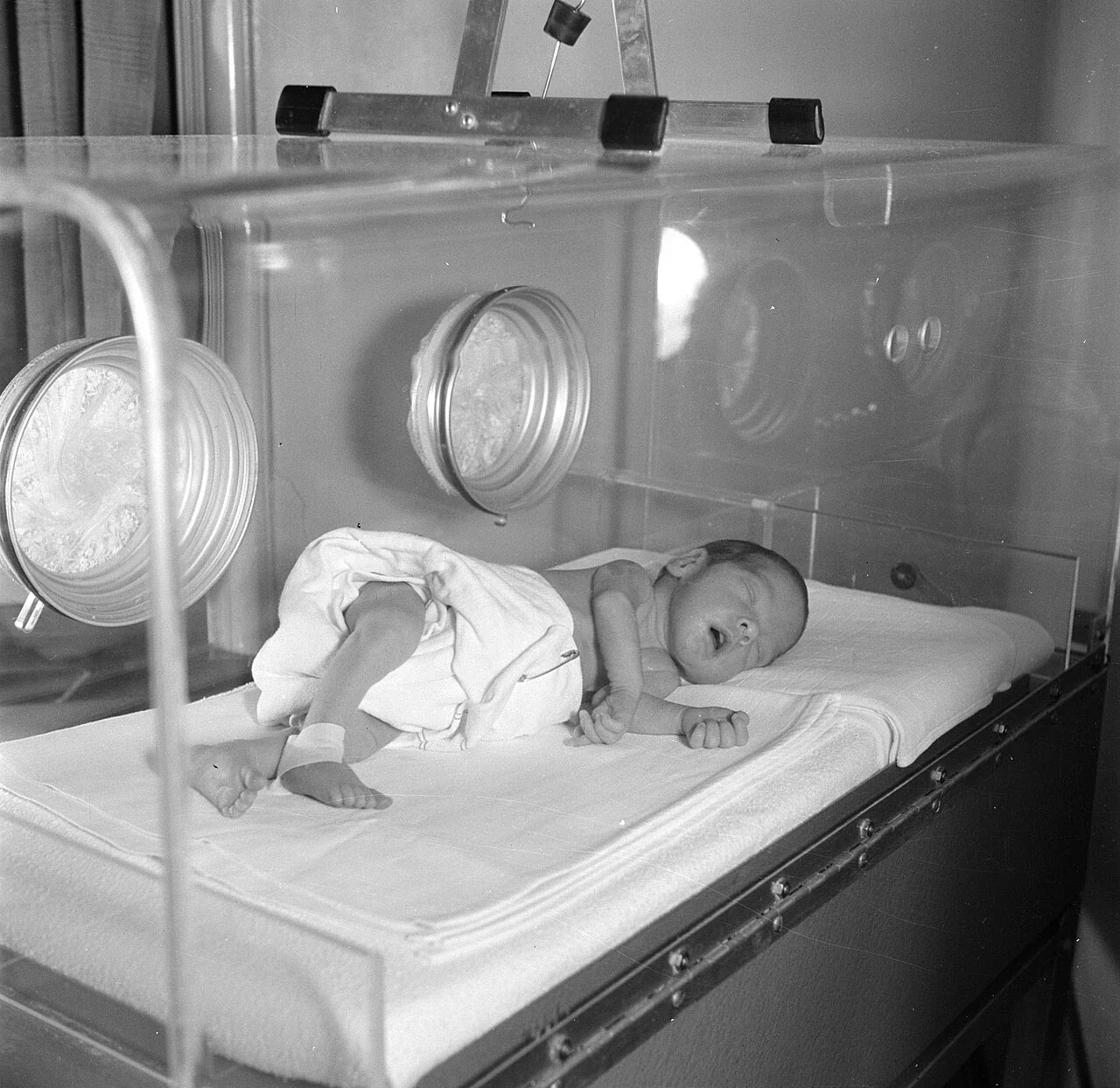
Quick answer: Newborns between Weeks 1 and 12 sleep 14 to 17 hours across 24 hours, broken into 2-to-4-hour pockets around feeding because their circadian rhythm has not yet developed. In Weeks 1–4, wake windows last just 35–60 minutes; by Weeks 5–8 (1–2 months), awake stretches reach 60–75 minutes; and by Weeks 9–12, a first night stretch of 4–6 hours usually emerges.
14–17
Hours of total sleep in 24 h
Normal newborn range across Weeks 1–12, split almost evenly between day and night at first.
35–60
Minutes awake, Weeks 1–4
Barely long enough for a feed, burp, diaper change, and going straight back down.
60–90
Minutes awake, Weeks 5–12
At 1 to 2 months, babies add 15–30 minutes of alert floor play after each feed.
8–12
Weeks when melatonin organises
When night sleep begins consolidating into a 4–6 hour first stretch.
A newborn sleep schedule is a flexible rhythm of feeding, brief awake windows, and frequent naps rather than a fixed timetable on the wall clock. Because an infant is born without an established circadian melatonin cycle, sleep in the first 12 weeks is governed almost entirely by hunger cues and fast-rising homeostatic sleep pressure.
Parents searching for a week-by-week plan usually want to know two things: whether their baby’s chaotic nights are normal, and when the first 4-to-5-hour stretch of night sleep will arrive. Below is how newborn sleep evolves from Week 1 through Week 12 (the end of month two), how to flip day-night confusion, and what a realistic 2-month day looks like on the clock.
How does newborn sleep change from Week 1 to Week 12?
Across the first 12 weeks, total 24-hour sleep stays relatively steady at 14 to 17 hours, while maximum awake time between naps doubles from 45 minutes in Week 1 to 90 minutes by Week 12, and the longest night stretch expands from 2–3 hours to 4–6 hours.
Use the week-by-week reference table below to track where your baby sits right now, or plug your morning wake time into our wake window calculator to map out today’s naps.
| Age by week | Awake window | Daytime naps | Longest night stretch | Typical bedtime | Total 24-hour sleep |
|---|---|---|---|---|---|
| Weeks 1–2 | 30–45 minutes | 6–8 naps (30 min–2 hr) | 2–3 hours (wake to feed until birth weight regained) | 9:30 pm – 11:00 pm | 15–17 hours |
| Weeks 3–4 (1 month) | 45–60 minutes | 5–7 naps | 2.5–4 hours | 9:00 pm – 10:30 pm | 14–17 hours |
| Weeks 5–6 | 50–70 minutes | 5–6 naps (evening fussing peaks) | 3–4.5 hours | 8:30 pm – 10:00 pm | 14–17 hours |
| Weeks 7–8 (2 months) | 60–80 minutes | 4–5 naps | 4–5.5 hours | 8:00 pm – 9:00 pm | 14–16.5 hours |
| Weeks 9–12 (2–3 months) | 75–90 minutes | 4–5 naps | 5–6.5 hours | 7:30 pm – 8:30 pm | 14–16 hours |
How do Weeks 1–4 compare vs. Weeks 5–8 vs. Weeks 9–12?
Comparing Weeks 1–4 versus Weeks 5–8 versus Weeks 9–12 clarifies why a soothing trick that works in the hospital stops working at 6 weeks. Each 4-week block brings a different neurological priority.
- Weeks 1–4 (The fourth-trimester recovery): A newborn’s awake window is 35 to 60 minutes—barely enough time to unswaddle, feed both sides or a bottle, burp, change a diaper, and reswaddle. Day and night look identical to the baby’s brain.
- Weeks 5–8 (Peak evening crying and social smiles): Around Week 6, crying duration reaches its developmental peak (often 2 to 3 hours between 5:00 pm and 9:00 pm, even in healthy babies). At the same time, social smiles appear and daytime wake windows stretch to 60–75 minutes.
- Weeks 9–12 (Circadian emergence): Endogenous melatonin begins rising in the evening, cortisol rises in the morning, and the 9:30 pm bedtime shifts naturally toward 7:30 pm–8:30 pm. By Week 10 to 12, many babies start rolling onto their sides—the signal to review our swaddle vs. sleep sack transition guide.
What does a realistic 1-month and 2-month sample schedule look like?
While no newborn follows a rigid military clock, anchoring the morning around 7:00 am and capping individual daytime naps at 2 hours creates a predictable flow. Compare these two worked routines, or browse all age bands on our sample sleep schedules page.
| Time of day | 1-Month-Old (Weeks 3–4, ~60m wake windows) | 2-Month-Old (Weeks 8–10, ~75–85m wake windows) |
|---|---|---|
| 07:00 am | Wake, daylight exposure, full feed #1 | Wake, open curtains, full feed #1 + tummy time |
| 08:00 am – 09:30 am | Nap 1 (90 minutes) | 08:15 am – 09:45 am: Nap 1 (90 minutes) |
| 09:30 am – 10:30 am | Feed #2, diaper change, brief face-to-face chat | 09:45 am – 11:05 am: Feed #2, floor play |
| 10:30 am – 12:15 pm | Nap 2 (105 minutes) | 11:05 am – 12:35 pm: Nap 2 (90 minutes) |
| 12:15 pm – 01:15 pm | Feed #3, burp, diaper | 12:35 pm – 01:55 pm: Feed #3, stroller walk |
| 01:15 pm – 03:00 pm | Nap 3 (105 minutes) | 01:55 pm – 03:10 pm: Nap 3 (75 minutes) |
| 03:00 pm – 04:00 pm | Feed #4, quiet sensory time | 03:10 pm – 04:30 pm: Feed #4, play |
| 04:00 pm – 05:15 pm | Nap 4 (75 minutes) | 04:30 pm – 05:15 pm: Nap 4 (45-min carrier/cot catnap) |
| 05:15 pm – 06:15 pm | Feed #5 | 05:15 pm – 06:30 pm: Feed #5, bath |
| 06:15 pm – 07:00 pm | Nap 5 (45-min evening catnap) | 06:30 pm – 07:15 pm: Nap 5 (45-min bridge nap if needed) |
| 07:00 pm – 09:30 pm | Cluster feeds #6 & #7, dim lights, bedtime at 9:30 pm | 07:15 pm – 08:15 pm: Final feed #6, routine, asleep by 8:15 pm |
| Overnight | 2 to 3 night feeds every 2.5–3.5 hours | 1 to 2 night feeds (e.g., 1:00 am and 4:30 am) |
How do you fix day-night confusion and survive the 6-week witching hour?
Day-night confusion happens because a fetus sleeps through daytime maternal movement and wakes when the mother lies still at night. You can align your newborn’s internal clock 2 to 3 weeks faster by pairing daytime light and calorie loading with strict nighttime darkness.
Follow these 5 steps starting from Week 2:
- Take your baby into natural outdoor light before 9:00 am. Even 10 minutes near a bright window or porch sets the suprachiasmatic nucleus.
- Cap any single daytime nap at 2 hours. If a newborn sleeps 4 hours straight at 1:00 pm, they will almost certainly stay awake for 3 hours at 2:00 am. Wake them gently at the 2-hour mark for a full daytime feed.
- Feed every 2.5 to 3 hours between 7:00 am and 7:00 pm. Packing calories into daylight reduces the metabolic need to feed every 90 minutes overnight.
- Use a carrier or stroller nap for the 4:30 pm–6:00 pm witching hour. Late afternoon naps are the hardest of the day; a 35-minute contact or carrier nap prevents runaway cortisol before bedtime.
- Keep nights boring from 8:00 pm to 6:00 am. Keep white noise running, change only poopy or soaked diapers under a dim red light, and skip eye contact and talking until morning.
How do you help a newborn accept the bassinet when they only want contact naps?
It is biologically normal for a newborn to prefer sleeping on a warm chest. To build bassinet familiarity without tears, practice one bassinet nap per day—always Nap 1 in the morning, when sleep pressure and calm are highest—while letting afternoon naps happen in a carrier or arms if needed.
Warm the bassinet mattress for 3 minutes with a warm water bottle (remove it completely before placing the baby in), swaddle snugly if under 8 weeks and not rolling, and lower your baby feet-first, then bum, then back, keeping a firm warm hand on their chest for 60 seconds while they settle through the initial startle reflex. Look ahead to our 3 to 5 month old sleep schedule and wake windows by age guide as your baby approaches 12 weeks.
What are the non-negotiable safe sleep rules for newborns?
Every newborn sleep setup should follow the 2022 American Academy of Pediatrics safe-sleep recommendations: place your baby flat on their back for every nap and night sleep on a firm, non-inclined bassinet or cot mattress covered only by a fitted sheet, in your bedroom (room-sharing without bed-sharing), with zero loose blankets, pillows, positioners, or weighted swaddles.
Room temperature should sit comfortably between 16 and 20 °C (60–68 °F) to prevent overheating, and offering a clean, dry pacifier at nap and bedtime is associated with a reduced risk of SIDS once feeding is established. All schedules and tips in this article are educational information and are not medical advice; always consult your paediatrician regarding weight gain, jaundice, reflux, or breathing concerns.
Questions
Can you put a newborn on a strict clock schedule?
No. In the first 8 to 10 weeks, a newborn's stomach capacity is small and their suprachiasmatic nucleus does not yet produce a strong day-night melatonin rhythm. Instead of a fixed clock schedule, follow an eat-play-sleep flow anchored by 45-to-90-minute wake windows and responsive feeding every 2 to 3 hours by day.
Should I wake my sleeping newborn to feed?
Until your newborn regains their birth weight (usually by days 10 to 14) and your paediatrician clears them, wake your baby every 2 to 3 hours around the clock to feed. Once birth weight is regained and weight gain is steady, wake every 2 to 3 hours during the day so calorie intake stays in daylight, and let them sleep longer stretches at night.
How do I fix newborn day and night confusion?
Expose your baby to bright natural daylight, normal household conversation, and full feeds every 2.5 to 3 hours between 7:00 am and 7:00 pm. From 8:00 pm to 6:00 am, keep the room dark, use a dim red or amber nightlight only for diaper changes, skip talking, and return your baby straight to the bassinet after burping.
Why does my newborn grunt, squirm, and make so much noise while sleeping?
Newborns spend roughly 50% of their sleep in active (REM-like) sleep, compared with 20–25% in adults. During active sleep and the transition between 50-minute cycles, newborns grunt, grimace, kick their legs, and briefly open their eyes while still asleep. Wait 60 seconds before lifting them out of the bassinet.
What is a good bedtime for a 1-month-old or 2-month-old baby?
In Weeks 1 to 6, bedtime is typically late—between 9:00 pm and 10:30 pm—because evening cluster feeding and the witching hour dominate the 6:00 pm to 9:00 pm block. Between Weeks 7 and 12 (around 2 months), as the first night stretch lengthens, bedtime naturally shifts earlier to 7:30 pm–8:30 pm.
How long can a 2-month-old sleep at night without feeding?
A healthy, full-term 8-to-10-week-old who is gaining weight well often sleeps one uninterrupted first stretch of 4 to 6 hours (for example, 8:30 pm to 1:30 am), followed by 2-to-3-hour stretches until morning. Always follow your paediatrician's feeding guidance for your baby's specific growth curve.
Sources
- Normal sleep patterns in infants and children: a systematic review of observational studiesGalland et al., Sleep Medicine Reviews, 2012
- Sleep-related infant deaths: updated 2022 recommendations for reducing infant deaths in the sleep environmentAmerican Academy of Pediatrics (Moon et al., Pediatrics, 2022)
- Helping your baby to sleepNHS
This guide is educational and does not replace advice from your paediatrician, health visitor or midwife.