Active Sleep in Newborns: Whimpering Noises, Nap Swaddling & Infant Lounger Safety
Why newborns grunt, whimper, and twitch in active sleep without being awake, whether to swaddle for daytime naps, and why infant loungers are unsafe for sleep.
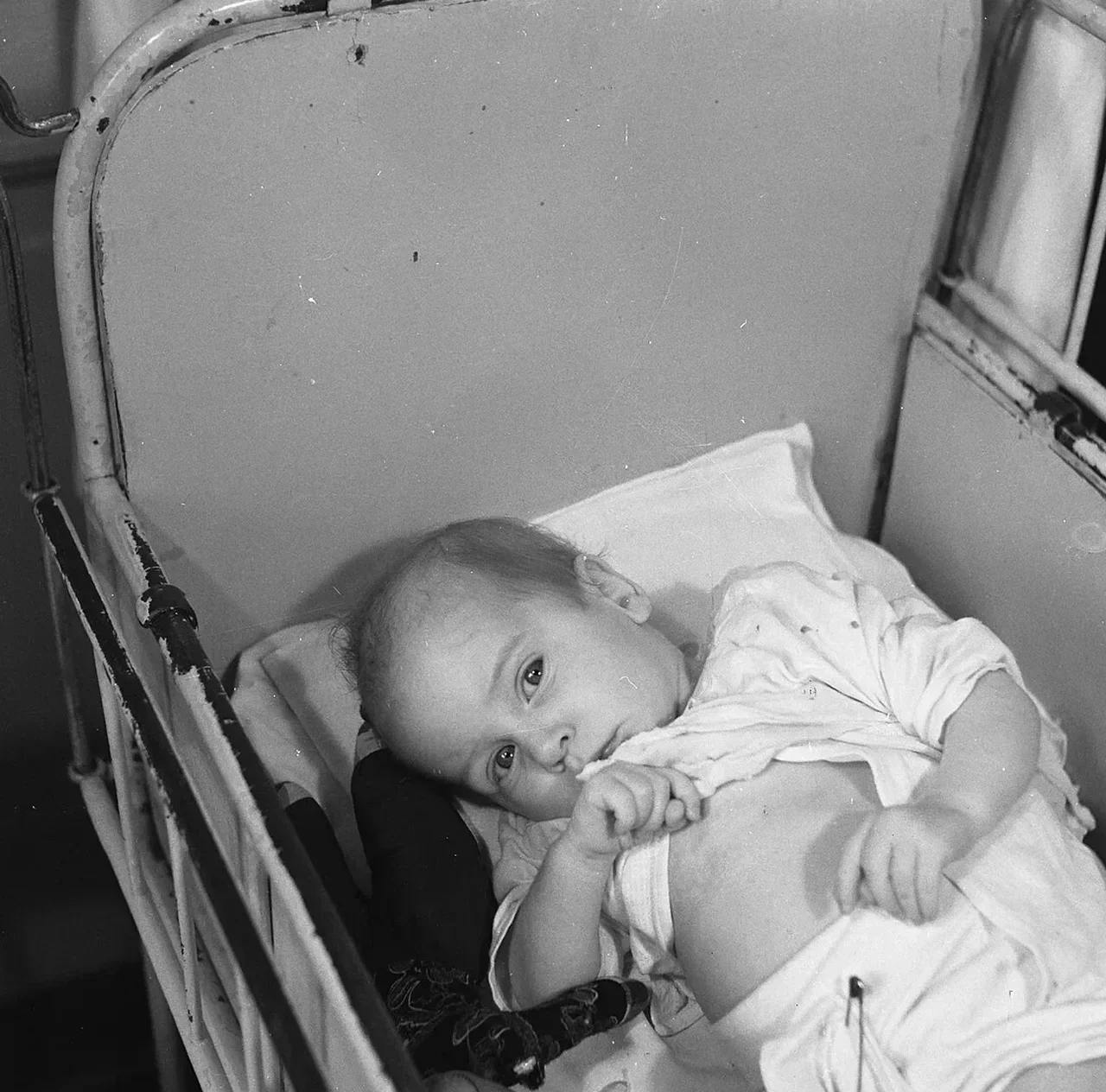
Quick answer: Newborns spend roughly 50% of their sleep in active (REM-like) sleep, during which immature brainstem motor inhibition allows them to whimper, grunt, smile, flutter their eyelids, and twitch for 30 to 90 seconds while remaining asleep. Wait 2 to 3 minutes before picking up a noisy newborn, swaddle for flat crib naps before rolling starts, and never let a baby sleep in an infant lounger.
50%
Newborn sleep spent in Active REM
Twice the adult REM proportion (~20–25%), supporting rapid brain synaptogenesis.
50–60 m
Full newborn sleep cycle
Splits roughly 25–30 minutes in Active Sleep and 25–30 minutes in Quiet Sleep.
2–3 min
Hands-off observation pause
Watch breathing and eyelids before lifting a whimpering newborn at night.
0 min
Safe unsupervised lounger sleep
Padded infant loungers and nests are strictly for supervised awake floor time.
Almost every first-time parent experiences the same 2:30 am surprise during the first month home: your newborn is lying flat in the bassinet right next to your bed, and suddenly they let out a sharp whimper, grunt like a miniature weightlifter,bicycle their legs, flash a brief smile, and flutter their eyelids—all within forty seconds.
When you rush over and scoop them up to feed them, you often aren’t rescuing an awake baby; you are accidentally waking a sleeping baby out of active sleep. Below is the neurology of active vs. quiet newborn sleep, how to use the two-minute observation pause, whether to swaddle for daytime naps, and why padded infant loungers are never safe for sleep.
What Is Active Sleep in a Baby and Why Are Newborns So Noisy?
Active sleep is the immature neonatal precursor to rapid-eye-movement (REM) sleep, accounting for roughly 50% of a newborn’s total 24-hour sleep time and characterized by rapid eye movements beneath closed lids, irregular respiratory rates, facial grimaces, brief vocalizations, and sudden phasic limb twitches.
Unlike adults—who descend through light and deep non-REM sleep for 60 minutes before entering their first REM cycle—newborns drop directly into active REM sleep the moment they fall asleep and stay there for the first 20 to 30 minutes of every 50-to-60-minute cycle. Only after surviving that initial active phase do they cross into deep, still quiet sleep (non-REM).
Why is a sleeping newborn so loud during that first half of the cycle? Two normal physiological processes overlap:
- Immature brainstem muscle atonia: In older children and adults, pontine nuclei in the brainstem inhibit spinal motor neurons during REM sleep so we do not act out our dreams. In a newborn under 12 weeks, those pathways are still developing, so every neural burst produces a visible twitch, whimper, squeak, or startle.
- Infantile dyschezia (early-morning grunting): Between 3:00 am and 6:00 am, newborns must learn to relax their pelvic floor while contracting their abdominal muscles to pass gas or soft stool. Because they do not yet coordinate those two muscle groups effortlessly, they strain, turn red, and grunt loudly in active sleep for 5 to 15 minutes without being in pain or truly awake (for evening crying vs. active sleep, see our overtired baby & witching hour guide).
Active Sleep vs. Quiet Sleep vs. Truly Awake (Diagnostic Table)
Comparing active sleep versus quiet sleep versus true waking hunger cues helps you avoid interrupting your baby’s sleep cycles at night or ending daytime naps 25 minutes too early.
| Observation Feature | Active Sleep (Neonatal REM — First 25m) | Quiet Sleep (Neonatal Non-REM — Second 25m) | Truly Awake & Ready to Feed |
|---|---|---|---|
| Eyes & Eyelids | Closed, or opening into a brief half-slit with rapid eye darting | Firmly closed and completely still | Wide open, bright, focusing or rooting toward chest/hand |
| Breathing Pattern | Irregular (35–55 breaths/min with normal 5-second periodic pauses) |
Slow, deep, rhythmic, and nearly silent | Quickening as vocalization builds |
| Body & Limb Movement | Finger splays, Moro startles, leg kicks, head turning, sucking motions | Relaxed, heavy tone with minimal movement | Persistent rooting, hands to mouth, purposeful kicking |
| Noises (Whimpers / Grunts) | Brief 5–30 second whimpers, squeaks, sighs, or grunting bursts that stop on their own | Silent | Continuous rhythmic cry that grows louder over 60–90 seconds |
| Parent Action | Hands off — wait 2 to 3 minutes | Leave undisturbed | Lift, unswaddle, change diaper, and offer full feed |
Step-by-Step: The 4-Step Pause Protocol When Your Baby Whimpers at Night
Before lifting your newborn at night or cutting a nap short at Minute 28, follow this four-step check:
- Count to 120 seconds silently before touching or speaking: Keep the bedroom dark and look at your watch or monitor clock for two full minutes. Roughly 70% of active-sleep whimpers and mid-cycle transition cries stop completely within 60 to 90 seconds if parents do not intervene.
- Check the eyelids before the mouth: A newborn can grunt, suck their tongue, and let out a single sharp cry with their eyes tightly shut. If the eyelids remain closed (or only flutter transiently), your baby is bridging between sleep cycles—do not lift them.
- Use steady in-crib palm pressure if a startle is escalating: If a Moro arm startle is threatening to wake a non-swaddled newborn fully, place a warm, still palm gently across their chest for 30 seconds while keeping the room dark and white noise steady (
≤50 dB—see our dressing newborn & room temperature guide). - Respond immediately once true hunger cues appear: When your newborn opens their eyes, roots side-to-side, and escalates into a sustained cry past the two-minute mark, lift them promptly for a calm night feed (or review our newborn sleep schedule by week for age-expected night stretches).
Should I Swaddle My Newborn for Naps? (Solving the 25-Minute Nap Trap)
Parents frequently ask should I swaddle my newborn for naps or save the swaddle exclusively for bedtime so the baby learns day from night. Here is how circadian biology and the Moro reflex interact:
- Weeks 0 to 2 (Fixing day-night confusion): In the first two weeks, expose your newborn to bright natural daylight and normal household conversation during daytime feeds and play. You can still swaddle for naps in a bassinet so their arms do not startle them awake after 20 minutes, while capping any single daytime nap at 2 hours to protect daytime milk intake.
- Weeks 3 to 12 (Preventing the 25-minute active-sleep wake-up): Because newborns spend the first 25 minutes of every nap in active sleep, an unswaddled six-week-old placed flat on their back will almost always throw both arms outward in a Moro startle at Minute 22 and wake up crying before ever reaching deep quiet sleep. Swaddling in a hip-safe cotton or muslin wrap (
0.5–1.0 TOG) for both daytime crib naps and night sleep helps them cross that 25-minute bridge. - Weeks 8 to 16 (Mandatory stop-swaddling milestone): As covered in our when to stop swaddling and switch to a sleep sack guide, you must transition both arms out into a wearable sleep sack for both naps and bedtime at the very first sign of attempting to roll.
Infant Loungers, Pods & Baby Nests: Why They Are Never Safe for Sleep
Why does a newborn who wakes after 20 minutes in a flat bassinet suddenly sleep for two hours when placed inside a cushioned infant lounger or padded baby nest on the sofa? Because the soft, curved bolsters hug the baby’s shoulders and suppress the Moro startle reflex—giving parents the illusion that the lounger is a miracle sleep aid.
However, the American Academy of Pediatrics (AAP 2022), the US Consumer Product Safety Commission (CPSC), and The Lullaby Trust are unequivocal: cushioned infant loungers, pods, and nests are never safe for sleep, including supervised daytime naps.
- Positional asphyxiation & rebreathing: If a newborn turns their face slightly into the padded fabric bumper of an infant lounger, carbon dioxide becomes trapped in the pocket around their nose and mouth, or their chin flexes downward against their chest—a silent process that looks identical to peaceful sleep even when a parent is sitting in the same room.
- What to use instead: Use an infant lounger only for awake, actively supervised floor time (such as face-to-face talking or brief tummy time propped over the bolster while you sit right next to your baby). The moment your newborn shows sleepy cues—check their exact window in our wake window calculator or daily schedule tables—transfer them into a firm, flat, bare bassinet, crib, or portable play yard wearing a snug swaddle (if not rolling) or an unweighted sleep sack. You can also print our complete AAP room-by-room safety audit in the Sleep Toolkit Bundles.
When Do Newborns Outgrow Active-Sleep Grunting and Noisy Nights?
Most infants outgrow loud active-sleep grunting and frequent whimpering between 10 and 16 weeks of age. Around the third month, two milestones converge: pelvic-floor coordination matures (ending 4:00 am infantile dyschezia straining) and neonatal active/quiet sleep reorganizes into four adult-like stages where sleep starts in quiet non-REM Stage N1 rather than REM.
This article is for educational purposes only and is not medical advice. Seek immediate medical evaluation if your newborn exhibits true respiratory distress—including nostrils flaring, skin pulling in tightly around the ribs or breastbone (retractions), persistent grunting on every single breath while awake or febrile, blue/dusky lips, or pauses in breathing lasting longer than 15–20 seconds.
Questions
What is active sleep in a newborn baby?
Active sleep is the neonatal equivalent of rapid-eye-movement (REM) sleep. During the first 12 weeks of life, newborns enter active sleep immediately upon falling asleep and spend about half of every 50-to-60-minute cycle in this light state, characterized by irregular breathing, eye fluttering, sucking motions, limb twitches, and brief whimpers.
Why is my baby making whimpering noises or grunting in their sleep?
In adults, the brainstem paralyzes skeletal muscles during REM dreaming so we stay still. In newborns, those inhibitory neural pathways are still myelinating, so your baby physically acts out sleep transitions—whimpering, grunting to pass gas, smiling, or startling—while remaining completely asleep.
How can I tell if my noisy newborn is in active sleep vs. truly awake?
Pause for 60 to 120 seconds and look at their eyes and rhythm. In active sleep, eyelids stay closed or flutter briefly, whimpers last 10 to 45 seconds, and the baby settles back into stillness. A truly awake and hungry newborn opens their eyes wide, roots persistently, and escalates into continuous rhythmic crying.
Should I swaddle my newborn for daytime naps as well as bedtime?
Yes, once day-night confusion resolves around 2 to 3 weeks of age, swaddling your pre-rolling newborn for daytime bassinet naps prevents the Moro startle reflex from ending the nap at the 25-minute active-to-quiet sleep bridge. Always stop swaddling for both naps and nights at the first sign of rolling.
Are infant loungers or baby nests safe for naps or overnight sleep?
No. The American Academy of Pediatrics (AAP), CPSC, and Health Canada warn that cushioned infant loungers, pods, and dock-style nests are never safe for sleep—even during supervised daytime naps. Soft padded bumpers pose a suffocation risk if a baby turns their face into the side bolster, and the recessed center can curve the neck.
When do newborns stop being so noisy when sleeping?
Active-sleep grunting and whimpering peak between 2 and 6 weeks of age and quiet down markedly between 10 and 16 weeks as brainstem motor inhibition matures, infantile dyschezia (learning to coordinate pelvic floor muscles) resolves, and sleep reorganizes into four stages.
Sources
- Sleep-Related Infant Deaths: Updated 2022 Recommendations for Reducing Infant Deaths in the Sleep EnvironmentAmerican Academy of Pediatrics (Moon et al., Pediatrics, 2022)
- Normal Sleep Patterns in Infants and Children: A Systematic Review of Observational StudiesSleep Medicine Reviews (Galland et al., 2012)
- Swaddling: Is It Safe for Your Baby?American Academy of Pediatrics / HealthyChildren.org
- Safer Sleep for Babies: Clear Cot and Sleep Surface GuidanceThe Lullaby Trust
This guide is educational and does not replace advice from your paediatrician, health visitor or midwife.