How to Dress a Baby or Newborn for Sleep: Room Temperature, Layers & TOG Guide
How to dress your newborn or baby for sleep at every nursery temperature (16–26 °C / 60–79 °F), with a sleep sack TOG chart, chest check, and decibel rules.
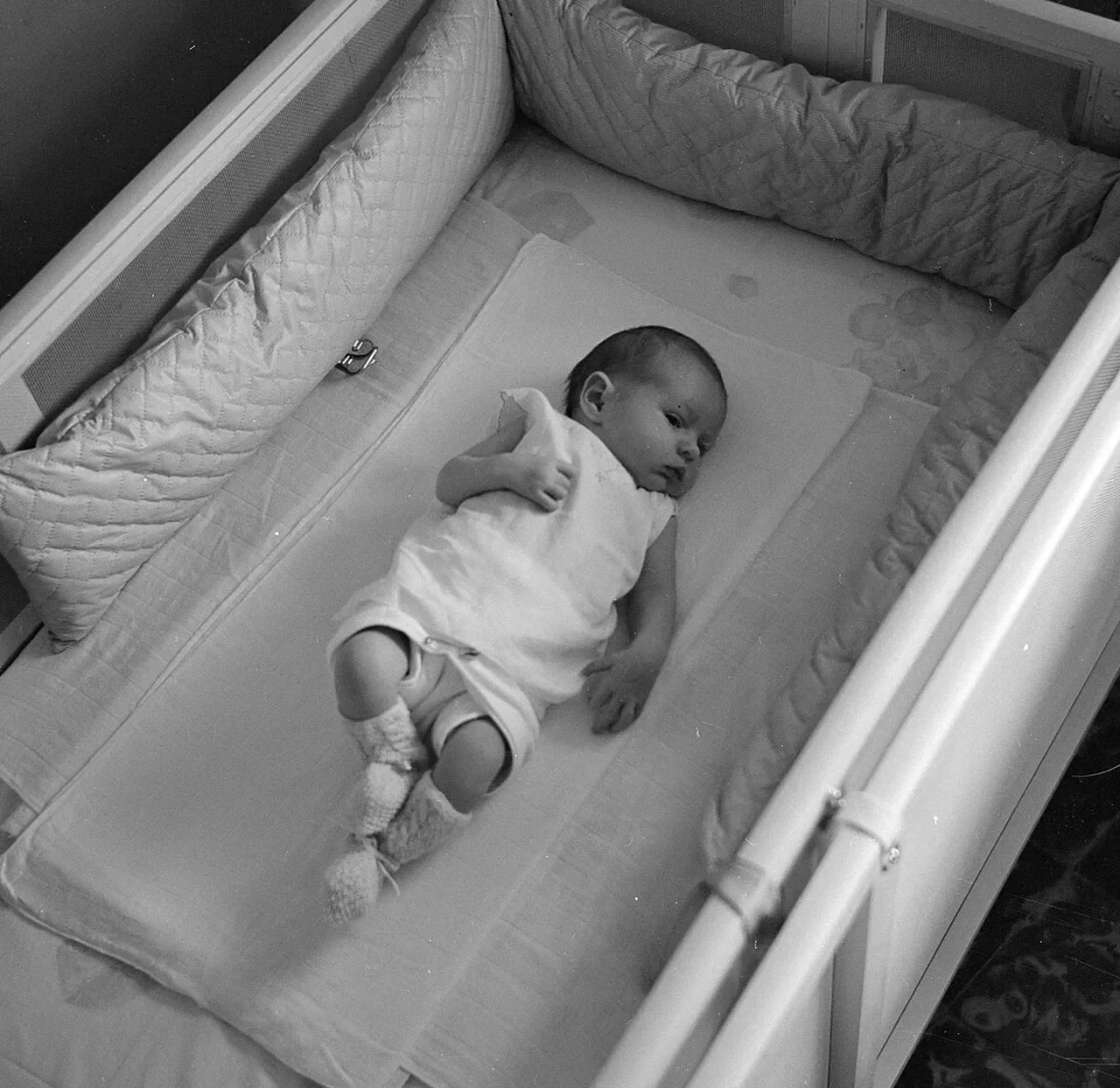
Quick answer: For safe, comfortable infant sleep, keep the nursery between 16 and 20 °C (60 to 68 °F) and dress your baby in one breathable cotton base layer plus an unweighted swaddle or wearable sleep sack matched to the room's TOG rating. Never use indoor hats or loose blankets, and check warmth by feeling the chest or back of the neck rather than hands or feet.
16–20 °C
Recommended nursery temperature
Equivalent to 60–68 °F per Lullaby Trust, NHS, and AAP safe-sleep guidance.
0.5–2.5
Standard sleep sack TOG range
0.5 TOG for warm rooms (24+ °C), 1.0 TOG for 20–23 °C, and 2.5 TOG for 16–19 °C.
0 hats
Indoor head-covering rule
Infants release excess body heat through the scalp; never use hats indoors for sleep.
≤50 dB
White-noise decibel ceiling
Measured at the crib mattress with the sound machine at least 2 metres (7 ft) away.
Standing in front of a nursery dresser at 9:30 pm wondering whether your baby needs a short-sleeve bodysuit, footed pyjamas, or a thicker sleep sack is one of the most universal anxieties of early parenthood. Dress an infant too warmly and thermal stress fragments their sleep (and raises safe-sleep risks); underdress them for a 4:00 am temperature dip and they wake up crying at the end of every REM cycle when core body temperature hits its circadian nadir.
Below is the complete clinical guide to dressing a newborn or baby for sleep across every room temperature from 16 °C to 26 °C (60 °F to 79 °F), how to read TOG ratings, how to perform the two-finger chest check, and how to set nursery white noise within safe decibel limits. You can also test your room’s exact numbers anytime in our interactive Nursery Temperature & TOG Finder.
What Is the Ideal Room Temperature and TOG Rating for Newborn Sleep?
Thermal Overall Grade (TOG) is a standardized laboratory measurement of thermal resistance indicating how effectively a baby sleep sack or swaddle retains body heat, where 0.2 to 0.5 TOG represents lightweight summer fabric and 2.5 TOG represents insulated winter quilting for cool bedrooms between 16 °C and 19 °C (61 °F to 67 °F).
Public-health bodies including The Lullaby Trust and the NHS advise keeping the room where your baby sleeps between 16 and 20 °C (60 to 68 °F), while many North American paediatricians cite 20 to 22 °C (68 to 72 °F) because of central air-conditioning norms. Physiologically, human sleep initiation requires a slight drop in core body temperature of roughly 0.3 to 0.5 °C (0.5 to 0.9 °F). A bedroom that is slightly cool to an adult—paired with breathable cotton layers and a properly rated wearable sleep sack—supports uninterrupted sleep while preventing overheating.
According to the American Academy of Pediatrics (AAP 2022) policy statement, parents should avoid loose blankets, quilts, duvets, and weighted swaddles or sleep sacks throughout the first 12 months. Instead, use the “one more layer” rule as a baseline: dress your newborn in what you would comfortably wear to sleep in that room, plus one light breathable cotton layer (the swaddle or sleep sack counts as that layer).
Master Chart: Dressing Baby for Sleep by Room Temperature (16–26 °C / 60–79 °F)
Comparing a cool winter bedroom (16–19 °C) versus a standard temperate nursery (20–22 °C) versus a warm summer room (24–26 °C) shows exactly how to adjust the inner cotton base layers under the sleep sack so you never have to pile loose bedding into the crib.
| Nursery Room Temperature | Recommended TOG Rating | Inner Clothing Layers Under Swaddle or Sleep Sack | What to Avoid |
|---|---|---|---|
| Below 16 °C (<61 °F) | 2.5 TOG (or 3.5 TOG if 14–15 °C) | Long-sleeve cotton bodysuit + cotton footed sleeper + socks under sleeper | Never add loose blankets, hot-water bottles, electric blankets, or indoor hats |
| 16–17 °C (61–63 °F) | 2.5 TOG | Short-sleeve or long-sleeve cotton bodysuit + long-sleeve cotton footed sleeper | Fleece sleepers inside a 2.5 TOG sack (synthetic fleece traps excessive sweat) |
| 18–19 °C (64–67 °F) | 2.5 TOG (or 1.0 TOG + warm sleeper) | With 2.5 TOG: long-sleeve footed sleeper only. With 1.0 TOG: bodysuit + footed sleeper |
Doubling up two sleep sacks or adding a folded crib blanket |
| 20–21 °C (68–70 °F) | 1.0 TOG | Short-sleeve cotton bodysuit + thin cotton footed sleeper (or long-sleeve bodysuit alone at 21 °C) | Heavy quilted 2.5 TOG winter sacks in a 21 °C heated room |
| 22–23 °C (71–74 °F) | 1.0 TOG (or 0.5 TOG) | Short-sleeve cotton bodysuit only inside a 1.0 TOG sack (or footed sleeper with no bodysuit in 0.5 TOG) |
Long-sleeve footed pyjamas + bodysuit + 1.0 TOG sack together |
| 24–25 °C (75–77 °F) | 0.5 TOG | Short-sleeve cotton bodysuit (onesie) or diaper only inside a 0.5 TOG muslin sack |
Any padded or quilted sleep sack (1.0+ TOG) |
| 26+ °C (78+ °F) | 0.2–0.5 TOG (or no sack) | Diaper + single-layer cotton vest/bodysuit (or diaper alone inside a 0.2 TOG gauze sack) |
Swaddling in multiple wraps; pointing a fan directly at the baby’s face |
If you want a fridge-ready copy of this temperature matrix alongside the AAP 2022 nursery safety checklist, it is included in our Newborn & Safe Sleep PDF Toolkit.
Why Hands and Feet Feel Cool: The Two-Finger Chest & Neck Check
One of the most frequent mistakes at 2:00 am is touching a newborn’s fingers or toes, feeling that they are cool, and wrapping the baby in an extra blanket. During the first three to four months of life, an infant’s autonomic capillary circulation prioritizes the heart, lungs, and brain; hands and feet are naturally several degrees cooler than the trunk and sometimes look slightly mottled in a 19 °C (66 °F) room.
Instead of checking extremities, compare the clinical signs of a comfortable infant versus an overheated infant versus a chilly infant at the sternum (chest) and nape of the neck:
- Comfortable thermal zone: Chest and back of the neck feel warm and dry to two flat fingers; breathing is quiet and regular (
30–50 breaths per minute); hands may feel cool to the touch. - Too hot (overheating warning): Back of the neck or upper chest feels hot, clammy, or damp with sweat; cheeks are flushed bright red; hair is damp; breathing is rapid (
>60 breaths per minute). Action: Unzip the sleep sack and remove one inner clothing layer immediately. Never bundle a feverish baby; dress them in fewer layers so heat can escape. - Too cold (waking at 4:00 am): Central chest and tummy feel cool to the touch; baby wakes frequently between 3:00 am and 5:30 am when household heating cycles off and tries to tuck knees under their belly for warmth. Action: Add a short-sleeve cotton bodysuit beneath the footed sleeper or step up from a
1.0 TOGto a2.5 TOGsleep sack.
Swaddle vs. Wearable Sleep Sack: How Age & Rolling Change Sleepwear
How you dress a newborn at three weeks is different from how you dress a rolling four-month-old. As detailed in our when to stop swaddling and transition to a sleep sack guide, the transition from a snug swaddle to an arms-free wearable blanket must happen at the very first sign of attempting to roll (typically between 8 and 16 weeks).
- 0 to 8–12 weeks (Pre-rolling newborn): A hip-healthy swaddle (
0.5or1.0 TOG) that keeps the shoulders snug while allowing the hips and knees to flex freely like a frog prevents the Moro startle reflex from waking your baby during active REM sleep. Remember that a traditional double-wrapped muslin swaddle counts as two thin layers (~0.5–1.0 TOG). - 3 to 12 months (Rolling infant): Both arms must remain completely free so the infant can push up and clear their airway if they roll onto their stomach. Choose a fitted neck opening (so the fabric cannot slip over the mouth) and an unweighted cotton or merino sleep sack.
- 12 to 36 months (Walking toddler): Footed 1.0 or 2.5 TOG sleep sacks (“walker sacks”) or standard sacks worn over two-piece cotton pyjamas prevent toddlers from kicking off blankets at 3:00 am AND make it much harder for an adventurous 20-month-old to swing a leg over the crib rail (see our safe sleep and crib transition guide).
Step-by-Step: How to Set Up the Nursery Environment Tonight
Follow this five-step pre-bedtime audit during your evening baby bedtime routine so room temperature, clothing, and sound levels stay consistent until morning:
- Read the room thermometer at crib-mattress height (not on a high bookshelf): Heat rises, and video baby monitors mounted near the ceiling or next to a warm camera lens frequently read
1.5to2.5 °C(3to5 °F) higher than the air at mattress level. Place a simple digital room thermometer at mattress height away from windows and radiators. - Match your baby’s base layer and TOG sack to the forecasted 4:00 am low temperature: Because outdoor and indoor temperatures drop between 2:00 am and 6:00 am, dress your baby for the lowest temperature the room will reach overnight rather than the warmer 7:00 pm reading.
- Stick to 100% breathable natural fibres (cotton, bamboo viscose, or merino wool): Synthetic polyester fleece does not breathe; if a nursery warms up by
2 °Covernight, a fleece sleeper inside a polyester-filled sack traps moisture against the skin. Breathable cotton bodysuits and cotton-lined sleep sacks buffer small temperature swings safely. - Set the white-noise sound machine at least 2 metres (7 feet) from the crib at ≤50 dB: In a landmark acoustic study of 14 infant sound machines published in Pediatrics (Hugh et al., 2014), researchers found that nearly all devices exceeded the
50 dBhospital nursery noise limit when placed on maximum volume near the crib rail. Place the machine across the room (at least200 cm / 7 ftaway) and verify with a free phone decibel meter right on the crib mattress that volume stays between45and50 dB. - Perform the two-finger sternum check 30 minutes after sleep onset (or during a dream feed): Before you go to bed yourself, lightly slip two fingers onto your baby’s upper chest or neck fold to confirm their skin is warm and dry, then leave them flat on their back on the firm, bare mattress.
How Room Temperature Connects to Wake Windows and Early Morning Wakings
Even the most accurate wake window calculator schedule or newborn weekly sleep routine will unravel at 5:00 am if the nursery drops from 20 °C at bedtime to 16.5 °C before dawn while the baby is wearing only a 0.5 TOG summer sack. Between 4:00 am and 6:00 am, homeostatic sleep pressure (adenosine) is nearly zero and sleep is dominated by light REM cycles; a slight chill that a baby would sleep through at 10:00 pm is enough to wake them fully at 5:15 am. Check our worked daily sleep schedules to align your daytime nap times once your nursery thermal setup is dialled in.
This article is for educational purposes only and is not medical advice. Always follow your paediatrician’s guidance and contact a healthcare professional immediately if your infant has a rectal fever of 38.0 °C (100.4 °F) or higher, lethargy, breathing difficulty, or persistent refusal to feed.
Questions
What is the ideal room temperature for a newborn to sleep?
Public-health safe-sleep guidelines from The Lullaby Trust and the NHS recommend a room temperature between 16 and 20 °C (60 to 68 °F), while US paediatric guidance commonly cites 20 to 22 °C (68 to 72 °F). A cool room paired with a properly rated wearable sleep sack reduces thermal stress and supports deep slow-wave sleep.
How do I dress my newborn for sleep at 68, 70, or 72 degrees Fahrenheit?
Between 68 and 72 °F (20 to 22 °C), dress a newborn or infant in a long-sleeve cotton footed sleeper (or a short-sleeve bodysuit plus footed pyjamas at 68 °F) inside a 1.0 TOG unweighted swaddle or wearable sleep sack, with no loose blankets and no indoor hat.
How can I tell if my baby is too hot or too cold at night?
Place two fingers on your baby's sternum (chest) or the nape of their neck. The skin should feel warm and dry. If the neck or chest feels sweaty, clammy, or hot to the touch, remove one inner layer immediately. Cool hands and feet are normal in infants because of immature peripheral circulation.
What does TOG mean on a baby sleep sack?
TOG stands for Thermal Overall Grade, a British textile unit that measures how much warmth a garment traps. A 0.5 TOG sack is a single breathable muslin or cotton layer for warm rooms (24–26 °C / 75–79 °F), 1.0 TOG suits moderate rooms (20–23 °C / 68–74 °F), and 2.5 TOG is padded for cool rooms (16–19 °C / 61–67 °F).
Why can newborns not wear a hat while sleeping indoors?
Newborns regulate body temperature primarily through radiation from the head and face. Covering an infant's head indoors traps heat rapidly and is a documented risk factor for thermal stress and sudden unexpected infant death (SUID). Remove hats as soon as you come indoors.
What is the safe decibel level for a baby white-noise sound machine?
Acoustic testing published in Pediatrics recommends keeping infant sound machines at or below 50 dB (similar to a quiet shower or soft rainfall) measured at the baby's head, placing the speaker at least 2 metres (7 feet) from the crib, and never placing a noise machine inside the crib.
Sources
- Sleep-Related Infant Deaths: Updated 2022 Recommendations for Reducing Infant Deaths in the Sleep EnvironmentAmerican Academy of Pediatrics (Moon et al., Pediatrics, 2022)
- Infant Sleep Machines and Hazardous Sound Pressure LevelsPediatrics (Hugh et al., 2014)
- Baby Sleeping Bags and Room Temperature GuidanceThe Lullaby Trust
- Helping Your Baby to Sleep SafelyNHS
This guide is educational and does not replace advice from your paediatrician, health visitor or midwife.