Newborns Sleeping With Pacifiers & How to Wean the Pacifier (0 to 36 Months)
Should newborns sleep with pacifiers? AAP SIDS-reduction rules, the 4–6 month pacifier game at night, and how to wean the pacifier (cold turkey vs Lily method).
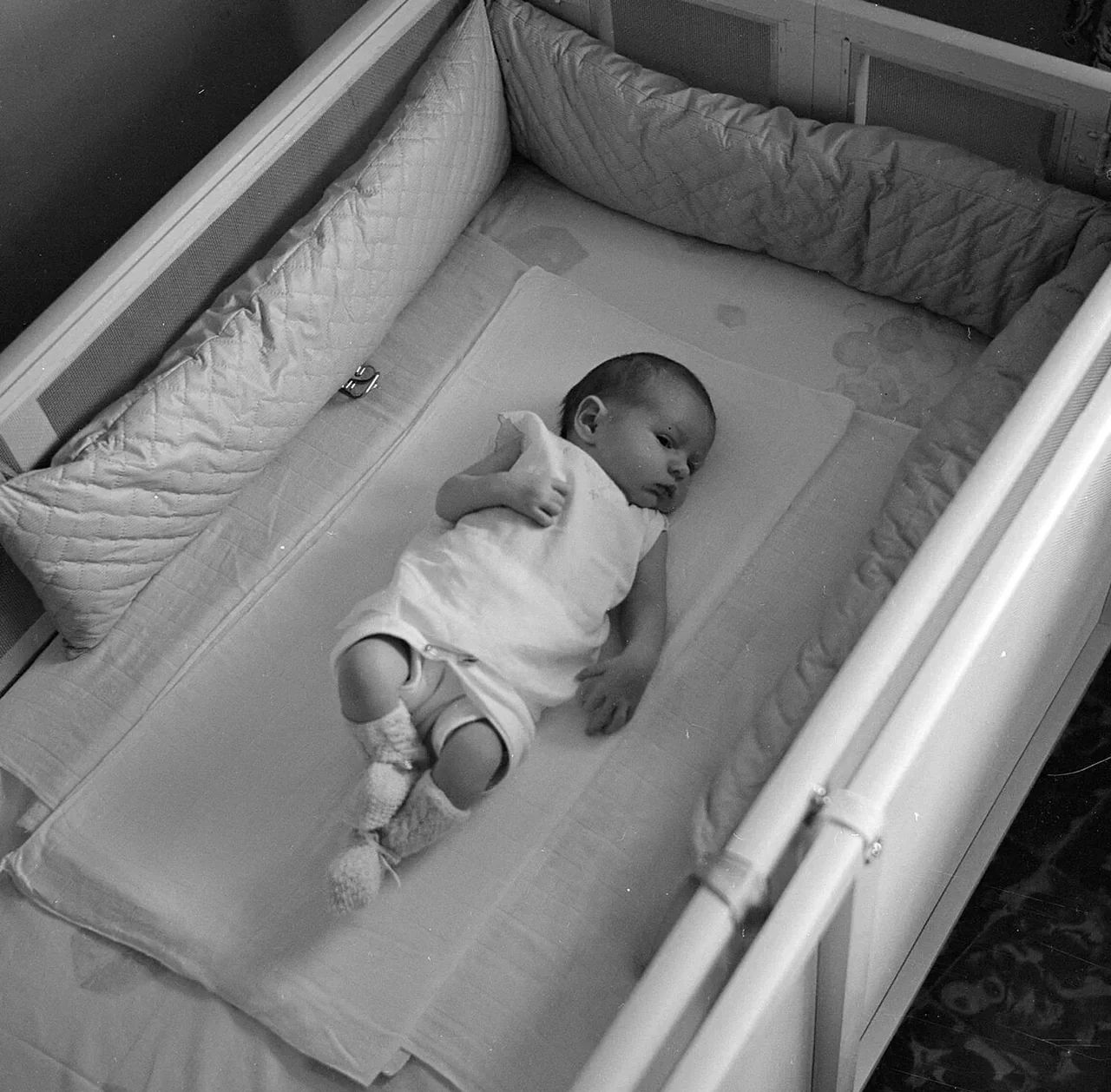
Quick answer: Yes—newborns can and should be offered a clean, one-piece, unattached pacifier at naptime and bedtime once feeding is going well. The American Academy of Pediatrics recommends offering a pacifier at sleep onset because it significantly reduces the risk of SIDS, and if the pacifier falls out of your newborn's mouth after they fall asleep, you do not need to reinsert it.
1 pc
Safe sleep pacifier design
Use a single-piece silicone or latex pacifier with zero clips, cords, ribbons, or plush toys attached.
6–8 m
Self-replacement milestone
Age when babies have the pincer and motor coordination to find and reinsert their own pacifier in the dark.
4–5 m
Early window to drop the paci
If you are playing the 'pacifier pong' game 6+ times a night during the 4-month regression.
3–5 d
Cold-turkey weaning timeline
How quickly infants (4–9m) or toddlers (18–36m) adjust once the pacifier is retired.
Whether you are staring at a 2-week-old in the bassinet wondering “should newborns sleep with pacifiers?” or walking down the hallway for the eighth time at 2:30 am to reinsert a fallen binky for a 5-month-old, the pacifier is one of the most misunderstood tools in infant sleep.
Pacifier weaning refers to the planned transition from sucking on a silicone or latex soother at sleep onset to falling asleep independently without oral suction, typically carried out either during the 4-to-6-month sleep-cycle maturation window or between 18 and 36 months to protect dental alignment and middle-ear health.
Below is the evidence-based roadmap covering newborn soother sleeping safety rules, how to survive (or end) the 4-to-6-month midnight pacifier replacement game, how to teach a 7-month-old to find their own pacifier in the crib, and step-by-step paci weaning tips (including the Lily method pacifier system vs. cold turkey).
Should Newborns Sleep With Pacifiers? The AAP SIDS Evidence
Yes—offering a clean, dry pacifier when you place your newborn down for every nap and bedtime is one of the strongest protective habits in the American Academy of Pediatrics (AAP) safe-sleep guidelines. Case-control studies show that can newborns sleep with a pacifier is not merely a comfort question: bedtime pacifier use reduces the risk of Sudden Infant Death Syndrome (SIDS) by roughly 50% to 60%, even when the pacifier falls out of the infant’s mouth within 15 minutes of falling asleep.
To use a pacifier safely from birth to 6 months, follow four strict clinical rules:
- Use a one-piece, unattached pacifier only: Never attach a pacifier clip, ribbon, cord, necklace, or plush animal (
WubbaNub-style toy) inside the bassinet or crib. - Never force or reinsert it after sleep onset: If your newborn refuses the pacifier at bedtime, do not force it; if it drops onto the mattress once they are asleep, leave it until they wake.
- Never coat the nipple: Never dip a pacifier in honey (which carries infant botulism risk under 12 months), sugar water, or formula.
- Coordinate with breastfeeding: If you are nursing, offer the breast first whenever your newborn shows hunger cues, and introduce the sleep pacifier once latch and milk transfer are comfortable (check your newborn’s feed-and-nap rhythm in our newborn weekly sleep schedule).
Newborn Soother Use vs. 4–6 Month “Pacifier Pong” vs. Toddler Weaning
The role of a pacifier changes dramatically across the first three years of life. Compare how newborn soother sleeping differs from the 4-month sleep regression and toddler pacifier habits:
| Stage & Age | Developmental Reality | Common Sleep Impact | Recommended Parent Strategy |
|---|---|---|---|
Newborn (0–12 Weeks) |
Reflexive sucking calms the nervous system & protects airway | Helps newborn settle flat on back in bassinet; falls out safely in deep sleep | Keep offering at naps & bedtime (unattached, 1-piece) |
| 3.5 to 5.5 Months | Suck becomes voluntary; baby surfaces between 45m/90m cycles but cannot grab paci yet | “Pacifier Pong”: baby cries every 45–90m for you to re-plug the binky | Either wean cold turkey in 3–4 nights OR stop reinserting after bedtime |
| 6 to 14 Months | Fine-motor grasp & object permanence mature (6–8m) |
Baby can locate and reinsert their own pacifier if 4–6 pacis are in the crib | Scatter 4–6 glow-in-the-dark pacifiers in the crib corner + daytime practice |
| 18 to 36 Months | Emotional attachment to the “binky”; risk of anterior open bite & otitis media rises after 24–36m |
Toddler stalls at bedtime or wakes screaming when the single paci falls under the crib | Wean via 3-day countdown, Pacifier Fairy, or 5-step Lily Method |
How to Stop “Pacifier Pong” at 4 to 7 Months (Keep It vs. Drop It)
Between 14 and 24 weeks, the 4-month sleep regression permanently restructures your baby’s sleep cycles. If your baby falls asleep only while actively sucking on a pacifier, they will wake up fully 45 minutes into every nap and every 60 to 120 minutes after midnight shouting for you to put the pacifier back in their mouth.
Because a baby does not develop the manual dexterity to reach out in the dark, orient a pacifier, and place it into their own mouth until 6.5 to 8 months of age, you have two clear choices at 4 or 5 months:
Option A: Wean the Pacifier at 4–5 Months (3–4 Nights)
Between 4 and 6 months, your baby has not yet formed a deep emotional attachment to the pacifier—it is simply a mechanical sleep-onset association. If you remove the pacifier at bedtime tonight (pair this with age-appropriate wake windows from our wake window calculator and a chosen method from our sleep training comparison guide), most 4- and 5-month-olds learn to suck their fingers, rub their head softly, and link 90-minute night cycles within 3 to 4 nights.
Option B: Keep the Pacifier & Teach Self-Replacement at 6.5–8 Months
If your baby is already 6.5 months or older and you want to keep the pacifier for sleep:
- Play the “Crib Corner Treasure Hunt” twice a day: Place 5 or 6 one-piece pacifiers in one top corner of the crib mattress during daytime play. Tap the mattress near a pacifier and guide your baby’s hand to the pacifier (never put it in their mouth for them—let their own hand bring it to their lips).
- At night: When they fuss for the pacifier at
1:00 am, tap the mattress next to one of the 5 pacifiers in the crib and guide their wrist to it so their muscle memory takes over within 5 to 7 nights.
When to Wean the Pacifier (And What About Thumb Sucking?)
Both the American Academy of Pediatrics (AAP) and the American Academy of Pediatric Dentistry (AAPD) advise limiting or weaning pacifier use between 12 and 24 months (and completing weaning no later than 36 months).
- Why 12–18 months matters for ear infections: Studies show that continuous daytime and nighttime pacifier use after 12 months increases the incidence of acute otitis media (middle-ear infections) by altering pressure equilibration in the Eustachian tube. Limiting the pacifier strictly to the crib (naps and bedtime only) starting at 9 to 12 months cuts that risk immediately.
- Why 24–36 months matters for teeth: Prolonged sucking past age 2 to 3 years pulls the upper incisors forward (
anterior open biteoroverjet) and narrows the upper palate; when pacifier weaning happens before age 3, mild dental alignment shifts almost always self-correct naturally as the jaw grows. - What if my baby sucks their thumb when I take the pacifier away? During the 4-month swaddle and pacifier transition, brief finger or thumb sucking at sleep onset is a normal, self-regulated soothing mechanism. Most infants who use thumb sucking solely to fall asleep in a bare crib reduce daytime sucking naturally as language and hands-on play expand between 12 and 24 months.
How to Wean Off the Pacifier: Step-by-Step Protocol (3 Proven Methods)
Whether you are weaning a 5-month-old infant or a strong-willed 2.5-year-old toddler, pick one clear method below and never reintroduce a “backup” pacifier once a step is retired (mixed signals prolong crying by 300%).
5-Step Pacifier Weaning Protocol (Cold Turkey, Lily Method, or Pacifier Fairy)
- Step 1 — Restrict the pacifier to the crib only for 5 days (
Toddlers 12–36m): Before removing the sleep pacifier, eliminate all daytime pacifier use in the car seat, stroller, and living room. Every morning at07:00 am(see our daily schedule tables), have your toddler drop their binky into a “Sleepy Cup” kept on a high shelf inside their bedroom so it only exists inside the crib. - Step 2 — Choose your weaning mechanism (
Lily Methodvs.Pacifier Fairy): Pick either The Lily Method (5–10 days, gradual—replacing your toddler’s binky every 2 days with the next numbered pacifierStep 1throughStep 5, each featuring a progressively shorter silicone bulb until Step 5 cannot stay in the mouth by suction) or The 3-Day Countdown / Pacifier Fairy (3–4 nights, immediate—for toddlers aged 24 to 36 months, mark three days on a paper calendar, let your toddler decorate a gift bag for “the new babies who need binkies,” and exchange the bag on Morning 4 for a special crib-safe lovey or toy; see our toddler night-waking & bedtime guide). - Step 3 — Move bedtime 15 to 20 minutes earlier on Nights 1 to 4: Without oral suction, your baby or toddler will take 15 to 30 extra minutes to wind down on the first three nights. Shifting lights-out 15 minutes earlier prevents an adrenaline cortisol spike while they practice settling without the pacifier.
- Step 4 — Substitute rhythmic tactile and vocal soothing at bedtime: During your 20-minute bedtime routine, add extra proprioceptive calm (warm bath, firm lotion massage, deep belly breaths for toddlers) and offer a safe sleep lovey (for children over 12 months only) so their hands have a familiar texture to hold.
- Step 5 — Hold the boundary through Night 3 (
The Extinction Burst): Night 1 and Night 2 typically involve 20 to 40 minutes of protest at bedtime or naptime; by Night 4 to Night 5, sleep onset drops to under 15 minutes and middle-of-the-night pacifier call-outs disappear permanently.
When to Call Your Paediatrician or Pediatric Dentist (Medical Disclaimer)
Pacifiers are a safe, protective sleep tool in infancy and a manageable habit to retire in toddlerhood. If you want printable 14-day sleep logs and caregiver handoff sheets to keep grandparents and daycare aligned during pacifier weaning, explore our Sleep Toolkit Bundles. This article is for educational information only and is not medical advice. Consult your paediatrician, lactation consultant, or pediatric dentist if your newborn has difficulty latching or gaining weight, if your child experiences recurrent ear infections (3+ episodes in 6 months), or if dental bite changes persist past 30 to 36 months.
Questions
Should newborns sleep with pacifiers, and what if it falls out at night?
Yes. Offering a pacifier at the start of every nap and bedtime is endorsed by the American Academy of Pediatrics because sucking keeps the upper airway open and lowers SIDS risk—even after the pacifier drops out of the baby's mouth during deep sleep. Once your newborn is asleep and the pacifier falls out, leave it out until they wake for their next feed.
Can a breastfed newborn use a pacifier for sleep right away?
If nursing is establishing smoothly—your baby is latching well, transferring milk effectively, and regaining birthweight on track—you can offer a pacifier for soothing and sleep in the early weeks. If latch or weight gain is still tricky in the first 1 to 2 weeks, ask your lactation consultant or paediatrician before introducing an artificial nipple.
Are pacifiers with stuffed animals (WubbaNub) or clips safe for sleeping?
No. Never let a baby sleep in a crib or bassinet with a pacifier attached to a plush animal, blanket, string, ribbon, or clothing clip. Cords and clips pose a strangulation hazard, and attached plush toys introduce a suffocation risk near the nose and mouth.
Why am I playing the 'pacifier game' every 45 minutes with my 4-month-old?
Around 3.5 to 5 months, sleep cycles reorganize so your baby briefly surfaces into light sleep every 45 minutes during naps and every 90 to 120 minutes overnight. Because a 4-month-old cannot yet grab and reinsert a fallen pacifier in the dark (a skill that develops at 6 to 8 months), they cry for you to plug it back in at every cycle transition.
When is the easiest age to wean a baby or toddler off the pacifier?
There are two low-friction windows for pacifier weaning: first, between 4 and 6 months (when the suck reflex switches from involuntary to voluntary and object permanence has not yet peaked), and second, between 18 and 36 months (when a toddler can understand a 3-day countdown or a 'Pacifier Fairy' trade before dental overbite changes become permanent).
What is the Lily Method (pacifier weaning system) vs. cold turkey?
The Lily Method (such as the Frida Baby Paci Weaning System) uses a series of 5 numbered pacifiers with progressively shorter nipples over 5 to 10 days until the bulb is too short to create suction, causing the toddler to lose interest on their own. Cold turkey removes all pacifiers on Day 1 after a 3-day preparation countdown and typically resolves bedtime protest within 3 to 5 nights.
Sources
- Sleep-Related Infant Deaths: Updated 2022 Recommendations for Reducing Infant Deaths in the Sleep EnvironmentAmerican Academy of Pediatrics (Pediatrics, 2022)
- Pacifiers and Thumb SuckingHealthyChildren.org / American Academy of Pediatrics
- A Parent's Guide to Safe SleepHealthyChildren.org / American Academy of Pediatrics
This guide is educational and does not replace advice from your paediatrician, health visitor or midwife.