Baby Sleeping on Stomach: Rolling in the Crib, Safe Tummy Sleep & Hip-Healthy Sacks
When can a baby sleep on their stomach? AAP rules for infants rolling onto their belly at 4 to 6 months, stopping swaddles or Merlin suits, and crib practice.
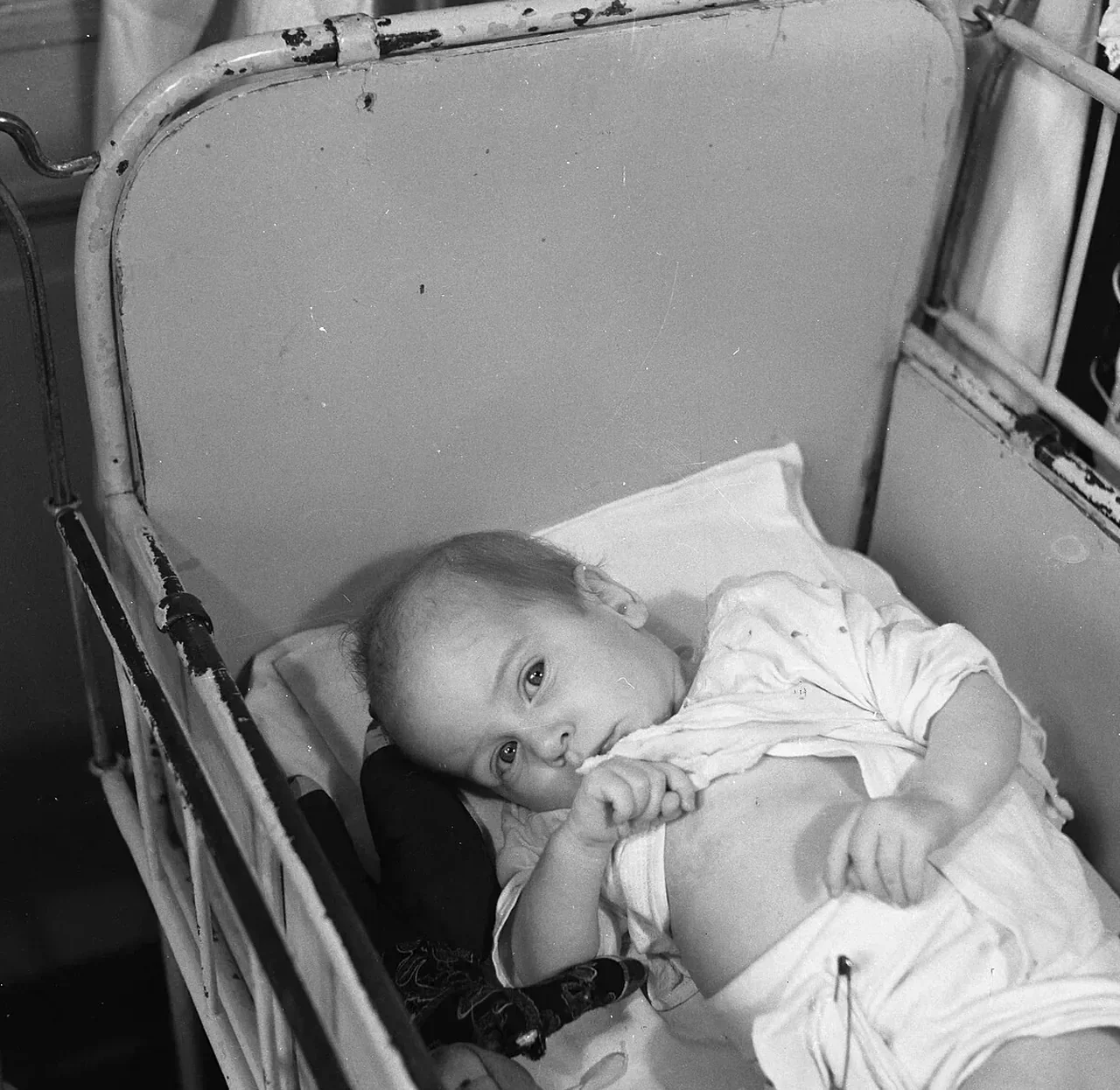
Quick answer: Always place your baby flat on their back at the start of every nap and bedtime throughout the entire first year (0 to 12 months). Once your infant can roll independently from back to stomach and stomach to back—typically between 4 and 6 months—you do not need to flip them back over if they roll onto their belly during sleep, provided their arms are free in an unweighted sleep sack and the crib is completely bare.
0–12 m
Back-to-sleep placement window
Start every nap and night flat on the back until the first birthday, even after rolling begins.
4–6 m
Typical two-way rolling age
When independent back-to-belly and belly-to-back rolling makes unassisted tummy sleep safe.
3–7 d
Stomach-sleep adjustment phase
How long babies protest when they first roll onto their belly at night before mastering the position.
15–30 m
Daily daytime rolling practice
Floor practice during wake windows speeds up crib settling when babies get stuck on their tummy.
Few moments trigger more midnight anxiety than glancing at the video monitor and seeing your baby sleeping on their stomach for the first time. After months of following the strict back-to-sleep rule, watching a 4-, 5-, or 6-month-old sleeping on their belly raises an urgent question: do you need to tiptoe in and flip them onto their back all night long?
Stomach sleeping in infants refers to any prone sleep posture where a baby rests on their abdomen rather than supine on their back; clinically, intentional placement on the stomach before 12 months is a major risk factor for sleep-related infant death, whereas self-initiated rolling onto the tummy in a bare crib with arms free is a normal developmental milestone.
Below is the complete clinical and practical guide to when a baby can sleep on their stomach, what to do during the 3-to-7-night “stuck on the belly” phase, why stiff transition suits must be retired the day rolling starts, and how to choose a hip-healthy sleep sack.
Can Babies Sleep on Their Stomach? The AAP Rule Explained
You should always place your baby flat on their back at the start of every nap and bedtime until their first birthday (12 months), without exception. However, once your baby rolls from back to stomach on their own during sleep—most commonly between 4 and 6 months of age—the American Academy of Pediatrics (AAP) states that you do not need to turn them back onto their back, provided the sleep space meets three non-negotiable safety criteria.
Those three conditions are:
- Both arms are completely free: Your baby is no longer in an arms-in swaddle, weighted sack, or padded transition suit (see our swaddle vs. sleep sack transition guide).
- The mattress is firm, flat, and bare: The crib, bassinet (if still within weight/rolling limits—check our crib transition guide), or play yard has a tight fitted sheet and zero pillows, blankets, stuffed toys, bumpers, or infant loungers.
- Every sleep still starts on the back: Even if your 6- or 8-month-old flips onto their tummy within 10 seconds of touching the mattress, placing them down supine reinforces airway-protective arousal pathways.
Placed on Stomach vs. Rolling to Stomach on Their Own: Safety Comparison
Parents often wonder why stomach sleeping in an infant is dangerous at 6 weeks when placed prone, yet acceptable at 5 months when the baby rolls there independently. The difference between passive prone placement versus active motor rolling comes down to upper-body strength and brainstem arousal reflexes:
| Factor | Newborn Placed on Stomach (0–3 Months) |
Rolling Baby (4–12 Months, Back-to-Belly) |
Clinical & Practical Rule |
|---|---|---|---|
| How baby got onto belly | Placed prone by a caregiver (or rolled from a non-flat lounger) | Placed flat on back; rolled onto stomach using own core & neck muscles | Always place supine (0–12m); allow self-rolled tummy sleep |
| Head & airway control | Limited neck extension; may rebreathe trapped $\text{CO}_2$ in soft bedding | Strong cervical extension & head-turning reflex on a firm mattress | Firm, flat crib mattress with fitted sheet only |
| Arm & shoulder mobility | Often restricted if swaddled or in a stiff suit | Arms free in an unweighted sleep sack (0.5–2.5 TOG) |
Stop swaddling at first rolling attempt (8–16 weeks) |
| Sleep architecture | Immature neonatal REM/quiet sleep arousal threshold | Post-4-month adult-like NREM/REM cycles (see 4-month regression) | Never use incline positioners, wedges, or loungers |
What If My Baby Rolls onto Their Stomach and Screams (“Stuck on Belly” Phase)?
When a 3.5- to 5-month-old first learns to roll from back to tummy, they frequently practice the new motor skill at 2:00 am, land on their stomach, and cry out because they have not yet mastered rolling from tummy to back—or because sleeping on their belly feels unfamiliar. This adjustment window typically lasts 3 to 7 nights once you stop rescuing them every five minutes and practice the reverse roll during daytime wake windows.
If you rush in and flip your baby onto their back the instant they roll over, most babies will immediately roll right back onto their stomach 30 seconds later—turning bedtime into a 90-minute game of pancake-flipping. Instead, follow the 5-step protocol below.
5-Step Protocol for the Crib-Rolling Transition (3–7 Nights)
- Audit sleepwear before tonight’s bedtime: Remove any swaddle, Velcro chest wrap, or padded transition suit (
Magic Merlin Sleepsuit) tonight and dress your baby in a well-fitted, unweighted arms-free sleep sack matched to room temperature (see our TOG & room temperature dressing guide). - Run three 5-minute “reverse roll” drills during every daytime wake window: Place a high-interest rattle just above your baby’s shoulder while they are on their tummy, guide one arm straight overhead (
180 degrees), and gently tilt their opposite hip so they feel how their body weight rolls from belly to back (time these drills in the middle of their age-appropriate wake window). - Practice daytime tummy-to-cheek resting on the play mat: During floor play, gently tap the mat and show your baby how they can turn their head to the side and rest their cheek flat on the floor when their neck gets tired during tummy time, instead of holding their chin up in frustration until they scream.
- Soothe in the tummy position for 2 to 3 minutes before flipping at night: When your baby rolls onto their belly in the crib and fusses, wait 60 to 90 seconds to see if they settle their cheek down; if they escalate, place a warm hand on their back, pat rhythmically, and shush in the tummy position so they learn that the belly is a safe place to fall asleep.
- Reserve flipping for genuine exhaustion, then step back: If your baby is crying hard with arms locked straight up after 3 to 5 minutes of patting on their tummy, calmly roll them back to their back once, pat their chest for 30 seconds, and leave the room—do not stand over the crib flipping them 15 times in a row.
Magic Merlin Suit Safety & Transition Swaddles When Rolling Starts
A major cluster of parent searches centers on Merlin sleep suit safety (is the Merlin sleep suit safe, when to transition out of Magic Merlin). Padded microfibre or cotton suits like the Magic Merlin Sleepsuit are engineered solely to muffle the Moro startle reflex while a baby sleeps flat on their back.
- When to stop the Merlin suit: You must stop using the Magic Merlin Sleepsuit at the very first sign that your baby can roll—or attempt to roll—onto their side or stomach while wearing the suit, or when they begin rolling consistently during floor play (typically between 3.5 and 5 months). Because the thick, quilted sleeves reduce shoulder flexion, an infant who manages to flip onto their stomach inside a heavy transition suit can struggle to push their chest up or turn their head freely.
- Why weighted sleep sacks are never a safe replacement: The AAP’s 2022 safe-sleep guidelines explicitly advise against weighted swaddles, weighted transition suits, and weighted sleep sacks at any age because added chest weight can depress chest-wall expansion and impair arousal from tummy sleep.
Hip-Healthy Swaddling & What to Do If Your Newborn Hates the Swaddle
Before rolling starts (0 to 8 weeks), two related swaddling questions frequently arise: how to practice hip-healthy swaddling (to prevent hip dysplasia) and what to do when a newborn hates being swaddled or constantly breaks an arm free.
Hip-Healthy Swaddling vs. Tight-Leg Wrapping
In the uterus, a fetus spends months with hips and knees flexed and abducted (turned outward). After birth, forcing a newborn’s legs straight down (extension) and pressed tightly together (adduction) inside a narrow blanket puts leverage on the soft cartilage of the hip socket, increasing the risk of developmental dysplasia of the hip (DDH).
- The hip-healthy check: Whether you use a traditional muslin wrap, a Velcro swaddle, or a zip-up sleep sack, you should always be able to slide your hand under the bottom pouch and bend your baby’s knees up and outward like a frog without resistance.
What to Do If Your Newborn Hates the Swaddle (0–8 Weeks)
If you say “my newborn doesn’t like to be swaddled” because they arch, grunt, and fight until their hands break out of the collar:
- Check for loose collar fabric: A half-broken swaddle with loose fabric near the chin is an airway hazard.
- Try an arms-up pod (pre-rolling only): Many newborns calm immediately when their hands are enclosed in a winged “arms-up” swaddle pod near their cheeks so they can suck on their covered knuckles while the Moro startle is still contained.
- Go straight to an arms-free 0–3m sleep sack: Swaddling is never mandatory. If your newborn sleeps more peacefully with both arms out from week two, use a snug-necked, unweighted
0–3 monthsleep sack and align their daytime naps with our newborn weekly sleep schedule and sample daily schedules.
When to Call Your Paediatrician (Medical Disclaimer)
Rolling onto the stomach in the crib is a healthy motor milestone that most babies turn into their preferred sleep position between 5 and 12 months. For a printable room-by-room safe-sleep checklist and age-by-age schedule cards, see our Sleep Toolkit Bundles. This guide is for educational purposes only and is not medical advice. Always consult your paediatrician if your baby rolls onto their side in the first weeks of life (so they can check for muscle-tone asymmetry or torticollis), has severe gastro-oesophageal reflux, was born prematurely, or shows any breathing pauses or colour changes during sleep.
Questions
When can a baby sleep on their stomach without me flipping them back?
According to the American Academy of Pediatrics (AAP), if your baby rolls onto their stomach on their own after being placed on their back and has mastered rolling both ways (usually between 4 and 6 months), you can let them remain on their stomach—as long as they are not swaddled and the crib has a firm, flat mattress with zero pillows, bumpers, or loose blankets.
What if my 3- or 4-month-old rolls onto their stomach at night but cannot roll back yet?
First, stop swaddling and retire any weighted or stiff transition suits immediately so both arms and shoulders are completely free. During the 3-to-7-day learning curve when your baby rolls onto their belly and cries because they feel stuck, offer 15 to 30 minutes of daytime floor practice teaching them how to tuck one arm and roll back, and soothe them in the crib rather than flipping them endlessly every 10 minutes.
Is a 6-month-old sleeping on their belly face-down in the mattress safe?
Yes, provided the mattress is a firm, flat, safety-certified crib or play-yard mattress covered only by a tight fitted sheet. Firm infant mattresses do not indent around a baby's nose, and a 6-month-old with strong neck and upper-body control can turn their head reflexively to clear their airway whenever carbon dioxide rises.
Is the Magic Merlin Sleepsuit safe once a baby starts rolling?
No. Padded transition suits such as the Magic Merlin Sleepsuit are designed only for back-sleeping in a bare crib and must be discontinued at the very first sign that a baby can roll—or attempt to roll—while wearing the suit. Once rolling begins, switch to a lightweight, unweighted, arms-free sleep sack (0.5 to 1.0 TOG) that allows full mobility.
What is hip-healthy swaddling and how do sleep sacks protect a baby's hips?
Hip-healthy swaddling and sleep-sack design keep the upper wrap snug around the chest or shoulders while leaving a roomy, bell-shaped pouch at the bottom so the infant's hips and knees can flex and fall open naturally into a 'frog-leg' posture (abduction and flexion). Wrapping legs straight and pressed together increases the risk of developmental dysplasia of the hip.
Why does my newborn hate the swaddle or keep breaking their arms out?
Many newborns protest traditional arms-down swaddling because they prefer hands-to-face self-soothing—the same flexed posture they held in the womb. Rather than wrapping tighter around the hips or using unsafe weighted wraps, try an arms-up swaddle pod (before rolling signs appear) or transition directly into a fitted 0–3 month arms-free sleep sack.
Sources
- Sleep-Related Infant Deaths: Updated 2022 Recommendations for Reducing Infant Deaths in the Sleep EnvironmentAmerican Academy of Pediatrics (Pediatrics, 2022)
- A Parent's Guide to Safe SleepHealthyChildren.org / American Academy of Pediatrics
- Swaddling: Is It Safe?HealthyChildren.org / American Academy of Pediatrics
This guide is educational and does not replace advice from your paediatrician, health visitor or midwife.